Construction
Construction Translation Services
Techniwords provides construction translation services for general contractors, subs, and owners: specifications, submittals, safety training, and bid documents translated by specialists who know MasterFormat from AIA boilerplate. Spanish is our biggest construction language by far, because it is the language of a third of the American jobsite.
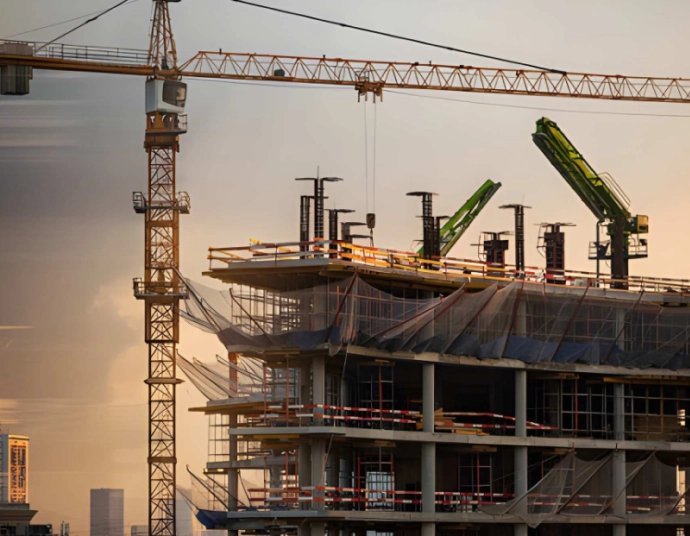
Toolbox talks, orientations, and OSHA 10/30 support materials in the Spanish your crews speak, aimed straight at the fatality gap BLS keeps documenting.
We translate Division 03 the way a spec writer reads it, keep three-part section structure intact, and know why A201 general conditions cannot be paraphrased.
Submittal windows and bid deadlines do not move for translation. Urgent RFIs and product data go out in 24–48 hours when the job needs them.
Construction translation services for a bilingual industry
American construction is built by a workforce that speaks two languages. Roughly 30 percent of construction workers in the United States are Hispanic, and on concrete, framing, drywall, and roofing crews in Texas, Florida, and California the share runs far higher. Meanwhile the documents that govern the work, from the project manual to the morning toolbox talk, are written almost entirely in English. That gap costs money in rework and RFIs, and it costs lives in the trenches and on the leading edge.
Techniwords closes that gap on paper. We translate construction documents in both directions: safety and training content going from English into Spanish for the field, and specifications, product data, and bid documents coming from foreign designers and manufacturers into American English for the office. After 15 years of technical translation work, our construction team reads plans, knows the difference between a submittal and a shop drawing, and delivers on the schedule your project actually runs on, not the one that would be convenient for a translator.
The safety case: what the BLS numbers say about language on site
Construction consistently records more workplace deaths than any other US industry, with roughly one thousand fatalities in a typical recent year according to the Bureau of Labor Statistics Census of Fatal Occupational Injuries. Within those numbers, BLS and academic studies have documented the same pattern for two decades: Hispanic and Latino workers die on the job at a disproportionate rate relative to their share of the workforce. Language sits near the center of that disparity. A worker who nods through an English-only orientation has not been trained; he has been present.
OSHA's construction standards at 29 CFR 1926 govern everything from excavation to fall protection, and OSHA training guidance requires instruction in a language and vocabulary workers can understand. Enforcement follows the same logic: citations have been upheld where training existed on paper but was never comprehensible to the crew. The practical fix is unglamorous and effective. Translate the orientation, the site-specific safety plan, the pre-task plans, and the disciplinary policy. Put bilingual signage where the hazards are. Our work translating jobsite signage and warning labels follows ANSI Z535.4 conventions, so PELIGRO and ADVERTENCIA appear exactly where DANGER and WARNING would, with the same signal word hierarchy.
The Focus Four, in the field's language: falls, struck-by, caught-in-or-between, and electrocution account for the majority of construction deaths tracked by OSHA. Every one of them has a precise Spanish vocabulary, and a toolbox talk that uses it lands differently than one improvised by a bilingual foreman at 6:45 a.m.
Toolbox talks and training: a program, not a pile of handouts
Most contractors do not need one document translated. They need a safety program that works in two languages, week after week. We build that with clients as a standing arrangement: a season of toolbox talks translated in batches, orientation decks and quizzes kept in sync as they evolve, and a glossary of your company terms so that every talk uses the same word for scaffold, ladder tie-off, and competent person. Our training material translation covers OSHA 10 and OSHA 30 support content, NCCER-style curriculum, fall protection and silica programs, and the short video scripts more crews now watch on phones.
Job hazard analyses deserve their own mention. An AHA or JHA is only useful if the crew doing the task can read the controls column, so our team translates risk assessments with the hazard-control pairing preserved line by line. One commercial GC we support had us translate its entire pre-task planning system into Spanish, cards and all; superintendents report the morning huddle got shorter because nobody translates on the fly anymore.
Specifications and MasterFormat: translating the project manual
The project manual is where construction translation gets technical. US specifications follow CSI MasterFormat's 50 divisions and the three-part SectionFormat: Part 1 General, Part 2 Products, Part 3 Execution. Translating a spec section means preserving that architecture, the defined terms, and the cross-references to drawings and other sections, because a contractor prices and builds from the structure as much as the sentences. Our technical specification translation work runs in both directions: US project manuals rendered into Spanish for Latin American joint venture partners and subs, and foreign specifications converted into MasterFormat-literate English when an overseas designer or design-build partner joins a US project.
The traps are specific. Reference standards must not be casually localized: ASTM C150 cement is not interchangeable with a European EN 197 class, and a translator who swaps one for the other has changed the contract. Units need engineering judgment, since US specs run on inches, psi, and cubic yards while foreign sources arrive metric; we convert where the spec intent requires it and annotate where it does not. And terms like provide, furnish, and install carry distinct contractual meanings that our glossaries hold constant across the entire manual.
Submittals, RFIs, and product data from foreign manufacturers
Global procurement reaches every large US jobsite. Curtain wall from China, stone from Brazil and Italy, elevators and MEP equipment from Europe, specialty steel from Korea: each package arrives with product data, test reports, and installation instructions that the architect will not review in the original language. We translate these into submittal-ready English, keeping test method references and performance values exact so the design team can check them against the spec. When a submittal bounces, schedules compress; urgent single documents move through our process in 24 to 48 hours with the independent review intact.
The paper flows the other way too. US contractors working with foreign fabricators send shop drawings, RFIs, and change order documentation out for translation, and the answers come back needing the same care. A typical package for us looks like this:
- Product data sheets and catalog cuts for architect review
- Test reports against ASTM, UL, or foreign standards, with the standard citations preserved
- Installation and storage instructions for field crews, often into Spanish at the same time
- Warranty documents and maintenance requirements for the closeout manual
- RFI responses and clarification sketches annotated in the fabricator's language
Bids, contracts, and the AIA family
International teaming is now routine on US megaprojects, from chip fabs to stadium jobs, and it generates bid-stage translation in volume. We handle RFP and tender translation for foreign contractors pursuing US work and for US firms bidding abroad: instructions to bidders, bid forms, geotechnical baseline summaries, and the technical narratives that win or lose the job. Deadlines rule this work, so we quote with the bid date in hand and deliver in prioritized order, pricing sections first when that is what your estimators need.
Contract documents demand a stricter standard. AIA A201 general conditions, ConsensusDocs, and bespoke EPC agreements are legal instruments where paraphrase is failure; our translators render them precisely and flag concepts that have no clean equivalent across legal systems, such as liquidated damages regimes or mechanics lien rights, so counsel on both sides sees the issue explicitly. For joint ventures we frequently prepare bilingual subcontracts and exhibit packages, formatted side by side so both partners are signing the same deal.
Spanish first, Portuguese close behind
Spanish dominates construction translation demand, and doing it well means choosing the right Spanish. Jobsite vocabulary in Texas leans Mexican; South Florida mixes Caribbean and South American usage; a talk written for Spain will read strangely on both. We default to a neutral Latin American register, then adjust to your regions, and our Spanish technical translation team includes former field engineers who have stood on US jobsites. Brazilian Portuguese is the second ask, driven by Brazilian subs and suppliers on Florida and Northeast projects and by US firms working in Brazil; for that pairing, start here.
A recent example: a general contractor mobilizing a semiconductor fab site in Texas needed its 60-page site-specific safety plan, orientation deck, and 26 weekly toolbox talks in Spanish before workforce ramp-up. We delivered the safety plan and orientation in eight business days, then the toolbox talks in four weekly batches, all under one glossary their safety director approved in the first week. The project onboarded over 400 Spanish-speaking workers with every required document in their language on day one. We are members of ATA and GALA, we work under an ISO 17100-compliant process with independent revision on every file, and we serve contractors nationwide from our base in Texas. Other sectors we cover are listed on the industries hub.
Closeout: the translation work everyone forgets until turnover
Closeout is where foreign-sourced equipment comes back to haunt a project. The owner's facilities team expects a complete O&M manual set in English, but the air handlers came from Italy, the elevators from Finland, and the loading dock equipment from Germany, each with operation, maintenance, and spare parts documentation that never got translated during procurement. Retention money sits until the closeout binder is complete, so what should have been a routine task becomes a schedule item with interest attached. We regularly rescue these packages in the final sixty days of a job, translating equipment manuals, warranty terms, and preventive maintenance schedules into a turnover-ready set.
The smarter version is to catch this at submittal stage: when a foreign product is approved, its closeout documentation gets translated then, on procurement's clock instead of turnover's. Either way, the details matter. Maintenance intervals and lubricant specifications must survive translation exactly, warranty conditions need legal precision because they allocate real risk over ten or twenty years, and training materials for the owner's staff often need a second version in Spanish for the building's actual maintenance crew. Punch list workflows benefit too; on internationally staffed jobs we have translated punch reports and back-charges in both directions so subcontractor disputes settle on facts rather than on what someone thought a line item meant.
What construction translation costs and how fast it moves
Construction work is priced per source word, with formatting quoted separately when documents carry heavy tables, drawings, or scanned content. Recurring safety programs run on volume pricing because the translation memory keeps improving the economics: your twentieth toolbox talk costs less than your first. Typical turnarounds look like this:
| Document | Typical volume | Turnaround |
|---|---|---|
| Toolbox talk or JHA, into Spanish | 500–1,500 words | 1–2 business days |
| Site-specific safety plan + orientation | 15,000–25,000 words | 1–2 weeks |
| Foreign submittal package into English | 5,000–20,000 words | 3–7 business days |
| Full project manual, selected divisions | 50,000–100,000 words | 3–5 weeks |
Send the actual files and you will get an itemized quote within one business hour, with a delivery schedule tied to your submittal log or bid date rather than a generic estimate.
Construction translation questions, answered
Can you translate our weekly toolbox talks into Spanish on a standing basis?
Yes, and that is the arrangement most contractors settle into. We translate talks in weekly or monthly batches under a glossary your safety team approves once, so terminology stays identical across the whole season. Each talk of 500 to 1,500 words returns within one to two business days, with sign-in sheets and quiz questions included. Because a translation memory carries your recurring content forward, repeated material is recognized and the per-talk cost drops steadily over the life of the program.
We received submittals from a foreign manufacturer. Can you make them architect-ready?
That is a core service. We translate product data, test reports, and installation instructions into submittal-ready American English, preserving performance values, test method citations, and standard references exactly so the design team can check them against the specification. Formatting follows your submittal register conventions, and we can stamp files with translation certificates when the architect or AHJ asks for them. When a rejection has already cost you schedule, urgent packages move through translation and independent review in 24 to 48 hours.
Do you translate both drawings and specifications together?
Yes, and it is better to send them together. Specifications, drawing notes, schedules, and legends share vocabulary, and translating them as one package under one glossary prevents the mismatch where the spec says one thing and the general notes say another. We work in the drawing files where possible, replacing text in callouts and title blocks rather than delivering a separate word list. Cross-references between sheet notes and spec sections are checked during the independent review, not left to chance.
How fast can you handle an urgent jobsite document?
Single urgent documents, an incident notice, a revised lift plan, an RFI response from a foreign fabricator, typically turn around in 24 hours, sometimes same day for short files received in the morning. We keep the independent review step even under rush conditions because jobsite documents are exactly where errors get expensive. Tell us the hard deadline when you send the file; we confirm feasibility immediately rather than accepting work we cannot deliver on time.
Can you support OSHA 30 or OSHA 10 training in Spanish?
OSHA authorizes trainers, not translators, so the card itself comes from an authorized outreach trainer, and Spanish-language courses exist through that system. What we do is translate the surrounding program: your company-specific supplements, site orientation materials, handouts, quizzes, and the policies the course references, so Spanish-speaking workers get a coherent package instead of a bilingual patchwork. Several clients pair an authorized Spanish-speaking trainer with our translated site materials, which keeps the certification valid and the content consistent with how your sites actually run.
Which Spanish do you use for US jobsites?
A neutral Latin American Spanish by default, adjusted to your workforce when you tell us where your crews are from. Mexican usage dominates Texas and the Southwest, while Florida sites mix Caribbean, Central American, and South American speakers, and certain trade terms differ between them. We resolve those choices in your project glossary at the start, testing disputed terms with your bilingual field staff when possible. The goal is simple: a laborer from Monterrey and a finisher from Tegucigalpa both read the same talk without stumbling.
Put every crew and every contract on the same page
Send us a toolbox talk, a foreign submittal package, or the spec divisions your JV partner needs in Spanish. You will get an itemized quote within one business hour and a delivery schedule built around your submittal log, your bid date, or your workforce ramp-up, whichever clock is running.
Get a Free Quote