Infrastructure sector
Civil Engineering Translation Services
Techniwords provides civil engineering translation services for the firms designing and building American infrastructure: geotechnical reports, bridge and highway specifications, environmental reviews, and multibillion-dollar tender packages. Our linguists read boring logs, AASHTO references, and P3 concession agreements the way your engineers do.
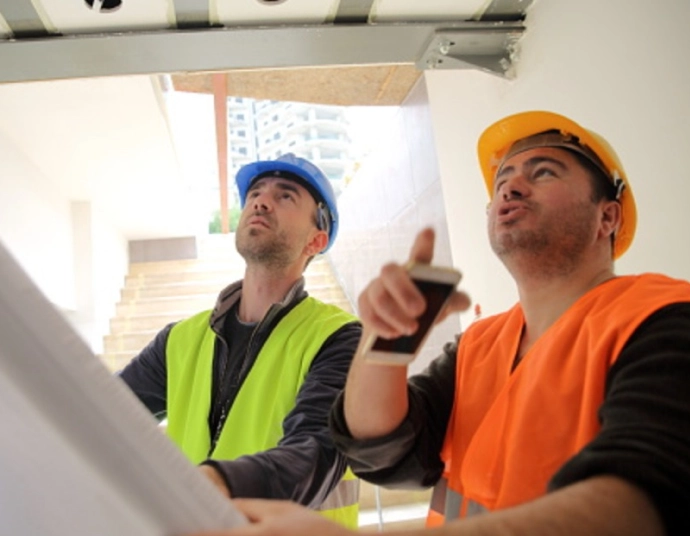
SPT blow counts, Atterberg limits, pile driving records. Our civil engineering translators have handled geotechnical data on highway, transit, and dam projects.
Spanish and French sponsors dominate US public-private partnerships. We move design criteria, board papers, and lender reports between languages on their schedule.
Every deliverable passes an independent second review by a qualified reviser, a discipline that mirrors the check-and-review culture of engineering itself.
American infrastructure now speaks several languages
The Infrastructure Investment and Jobs Act put $1.2 trillion into American roads, bridges, transit lines, airports, and water systems, with roughly $550 billion in new federal spending flowing through state DOTs and local agencies. That money did not stay domestic in any practical sense. Spanish groups such as Ferrovial and ACS subsidiaries, French concession operators, and design firms from a dozen countries are now prime players on US megaprojects, from managed lanes in Texas to automated people movers at major airports.
Every one of those arrangements generates bilingual friction. A Madrid-based sponsor wants monthly progress reports its board can read. A US DOT reviewer needs the Spanish contractor's method statements in English before approving a critical girder lift. A French equity partner asks for the independent engineer's certificate in both languages before releasing a drawdown. Civil engineering translation services exist for exactly these moments, and Techniwords has spent 15 years building the terminology, the reviewer bench, and the turnaround discipline that infrastructure work demands.
The documents civil engineering firms send us
Civil work produces paper at a scale most industries never see. A single design-build pursuit can involve thousands of pages of technical provisions, and the closeout of a highway project can run longer than its construction. The files that reach our project managers most often fall into a few families.
| Document family | Typical content | Common direction |
|---|---|---|
| Geotechnical and structural reports | Boring logs, SPT and CPT data, settlement analyses, load ratings | Spanish or French into English for US review |
| Technical specifications | Division-format specs, special provisions, design criteria | English into Spanish for sponsor teams |
| Environmental documentation | NEPA studies, mitigation plans, permit applications | English into Spanish for public outreach |
| Tender and proposal packages | RFQs, RFPs, ATCs, pricing narratives | Both directions under deadline |
| As-built and closeout records | Redline drawings, O&M turnover files, warranty documents | Into English for agency acceptance |
Behind each family sits a dedicated service. We translate geotechnical and structural engineering reports with engineers-turned-linguists who understand why a misread friction angle matters. Our technical specification translation services preserve section numbering, defined terms, and cross-references across thousand-page spec books. For permitting and public involvement, teams rely on our environmental report translation work, and at project closeout we handle as-built drawings and turnover records so agencies receive a clean English record set.
AASHTO, ASTM, and the standards layer under every highway
US infrastructure runs on a standards stack that foreign engineers must absorb quickly. The AASHTO LRFD Bridge Design Specifications govern how bridges are calculated. AASHTO M and T standards define materials and test methods for pavements. ASTM D1586 describes the Standard Penetration Test that anchors most geotechnical reports. State DOTs then layer their own standard specifications on top, and a Texas special provision reads nothing like its Caltrans counterpart.
Translating in this environment is a referencing exercise as much as a linguistic one. When a Spanish design package cites Eurocode EN 1992 for concrete, the English translation cannot silently swap in ACI 318; the two codes use different load factors and different philosophies. Our translators flag code references, keep them exactly as written, and add translator's notes where a US reviewer needs context. When an agency glossary exists, such as a DOT's own bilingual terminology list, we build it into the translation memory so that "subgrade," "falsework," and "prestressed girder" render identically across every deliverable on the program. This is the kind of discipline we bring as an ATA and GALA member company serving clients in all 50 states from our Texas base.
Geotechnical reports: where a translation error costs millions
Geotechnical baseline reports allocate subsurface risk between owner and contractor. That makes them contract documents, not background reading, and it makes their translation a liability question. If a translated GBR describes soil as "firme" where the English says "stiff," and the Spanish estimating team prices excavation off the translated text, a claim is already forming before the first shovel hits dirt.
Our process treats these reports with the care their legal weight deserves. Translators work from the lab data as well as the narrative, so that a USCS classification of CL stays "arcilla de baja plasticidad" and never drifts into looser wording. Blow counts, moisture contents, and unconfined compressive strengths pass through a numeric QA check that verifies every value against the source. Units are never converted silently: if the source reports 2,500 psf, the translation reports 2,500 psf, with a metric equivalent only when the client requests one in brackets. A second reviser, independent of the translator, then reads the full report against the source. That double-check is standard on every job because our workflow follows ISO 17100.
Subsurface risk travels through language. On one Gulf Coast managed-lanes project, our reviewers caught a draft that rendered "very soft clay" as "arcilla blanda," dropping the intensifier. The difference between soft and very soft clay in that formation was roughly 40 percent in undrained shear strength, enough to change the pile design. The correction cost nothing. The error would not have.
P3 megaprojects and the consortium paper trail
Public-private partnerships have restructured how large US infrastructure gets built, and they have made translation a permanent line item. A typical P3 concession joins a Spanish or French sponsor, a US contractor, international lenders, and a state agency into one contractual organism that lives for 30 years or more. The documentation follows the same arc: pursuit, financial close, design and construction, then decades of operations reporting.
During pursuit, we support RFP and tender translation under compressed schedules, turning statements of qualifications, alternative technical concepts, and legal exhibits around in days rather than weeks. After award, the rhythm changes to monthly and quarterly cycles: progress reports for the sponsor board, lender technical advisor reviews, insurance and warranty correspondence, and safety statistics that headquarters wants in its own language. Because the same defined terms recur for years, we maintain program-level translation memories and glossaries per concession, which cuts cost over time and keeps a 2032 handback report consistent with a 2026 design submittal. Several of our infrastructure clients have worked with the same Techniwords project manager across multiple pursuits, which matters when a proposal deadline lands on a holiday weekend.
PE stamps, sealed documents, and what translation can and cannot do
A recurring question from international firms: does a translated document carry the Professional Engineer's seal? The answer requires precision. A PE stamp attests that a licensed engineer takes responsibility for the engineering content of a document in the jurisdiction where the engineer is licensed. Translation does not transfer that responsibility, and a translator cannot re-seal a document. What we provide is a certified translation: a signed statement attesting that the English text is a complete and accurate rendering of the sealed source document. US agencies, boards, and courts accept this pairing of sealed original plus certified translation for licensure applications, dispute proceedings, and record submittals.
For foreign engineers pursuing US licensure by comity, we certify translations of degree records, project experience summaries, and reference letters. For disputes, we translate expert reports and sealed calculations with page-for-page fidelity so counsel can cite the translation against the original without ambiguity. And when a US firm needs to submit sealed work abroad, we prepare the translation so the receiving engineer can review and adopt it under local law. Understanding this boundary keeps everyone's liability where it belongs.
Why Spanish and French lead our civil engineering work
Language demand in this sector maps directly onto capital flows. Spanish leads by a wide margin because the largest foreign developers of US transportation P3s are Spanish: toll road concessions in Texas and North Carolina, terminal projects at JFK, managed lanes across the Sun Belt. Those companies run Spanish-language governance above an English-language project. Our Spanish technical translation team works in both directions daily, and its members know that a "viga" in a Madrid office and a girder on a Dallas jobsite must be the same object in the glossary.
French follows, driven by concession operators and engineering groups active in US airports, water infrastructure, and rail. Their internal design reviews, HSE audits, and board reporting typically move through Paris, which means English project records need French counterparts on a fixed calendar; you can learn more here about how our French team handles that cadence. Beyond these two, we regularly place German for tunneling equipment documentation and Portuguese for Latin American joint ventures, and the full range of sectors we cover is listed among the other industries we serve.
Terminology traps in infrastructure translation
Civil engineering vocabulary is full of false friends and regional splits that generic translators walk straight into. Spanish is the clearest case because the language of construction varies by country. "Concreto" is standard in Mexico and most of Latin America, while Spain says "hormigón"; a spec translated for a Madrid-based sponsor with a Mexican site workforce has to pick a lane and hold it. "Cimbra" means falsework in Mexico but centering in Spain. Even "grava" and "árido" divide along the same border. We resolve this at kickoff by asking one question: who reads this document, the sponsor's office or the field?
French brings its own snares. "Béton armé" is reinforced concrete, but "agrégat" is a mathematician's word; French engineers say "granulats" for aggregates. "Contrôle" covers both inspection and testing, so a translator must decide from context whether a "plan de contrôle" is an inspection and test plan or a quality control plan, two documents with different owners on a US job. And across all languages, US highway English itself needs handling: terms like "superelevation," "clear zone," and "crashworthy" have precise AASHTO definitions with no single-word equivalents abroad. We keep these decisions in a project termbase, reviewed by the client's engineers once, then enforced automatically on every file that follows. The result is that a term debated in week one never resurfaces as a problem in month nine.
How a civil engineering translation project runs at Techniwords
Infrastructure schedules do not flex, so our process is built around predictability. Every project starts with a scoping pass: we inventory the file set, separate drawings from narrative, identify text living inside tables and CAD callouts, and return an itemized quote within one business hour during business days. Large tender packages get split across a coordinated team working from a shared termbase, with a single lead reviser responsible for consistency. Deliverables come back in the original format, whether that is a Word spec book with styles intact, an Excel bid schedule, or a PDF report with translated figures.
A recent example shows the shape of this work. A European contractor pursuing a US transit design-build needed 380,000 words of employer's requirements, geotechnical data reports, and interface specifications translated into Spanish for its estimating center, with three weeks until bid day. We fielded a team of six translators and two revisers, delivered rolling batches every 48 hours so estimators never waited on the full set, and closed with a terminology report the client reused on its next two pursuits. The bid went in on time. That is the standard we hold on every infrastructure engagement, whether the file is a two-page permit letter or a full concession agreement.
Civil engineering translation: frequent questions
Can you translate geotechnical reports with boring logs and lab data?
Yes, and they are one of our most requested civil engineering documents. We translate the narrative, the boring logs, the lab summaries, and the appendices, keeping USCS soil classifications, SPT blow counts, and test standard references exactly as the source presents them. A numeric verification pass checks every value against the original, and an independent reviser reads the full report before delivery. We deliver in the original layout so figures, logs, and profiles remain usable by your engineers.
How do you support international consortiums on US projects?
We act as the language layer between the US project team and the foreign sponsor. That usually means translating design criteria, method statements, and progress reports on a recurring schedule, maintaining a program glossary so terminology stays stable for years, and providing fast turnaround on board papers and lender correspondence. One project manager stays on your account across the life of the concession, which keeps context from being lost between assignments and lets us respond to a request in hours rather than starting from zero.
Do you have experience with P3 and design-build procurements?
Yes. We have supported pursuits for managed lanes, transit, airport, and water P3s, translating RFQ responses, technical proposals, alternative technical concepts, and the legal exhibits behind them. P3 pursuits combine engineering, financial, and legal language in one package, so we assign translators by discipline and place a single lead reviser over the whole submission. We are accustomed to procurement confidentiality and can work under the NDAs and clean-team arrangements these deals require.
What volumes can you handle on a tender deadline?
A coordinated team routinely produces 15,000 to 20,000 finished words per day on large tenders without splitting terminology, because everyone works from a shared translation memory and termbase under one lead reviser. For a recent transit pursuit we delivered 380,000 words in under three weeks in rolling 48-hour batches. If your deadline is tighter than the math allows, we tell you up front and propose a triage: which volumes need full translation and revision, and which can take a lighter pass for estimating purposes.
Does a PE stamp remain valid on a translated document?
The seal belongs to the original document and the licensed engineer who signed it; translation neither voids it nor extends it. What we provide is a certified translation, a signed accuracy statement that accompanies the sealed original, and US agencies and courts accept that pairing for submittals, licensure applications, and disputes. If a document must be adopted into another jurisdiction's practice, a locally licensed engineer reviews and re-seals it there, working from our translation. We keep page and section numbering aligned so citation between versions is unambiguous.
Can you translate environmental and permitting documents for public outreach?
Yes. Agencies increasingly require Spanish-language versions of environmental assessments, mitigation summaries, and public meeting materials, particularly in Environmental Justice communities identified during NEPA review. We translate the technical substance accurately while keeping the public-facing register plain enough for non-engineers, which is its own skill. For long environmental impact statements, we can translate the executive summary and chapters relevant to the affected community first, then complete the record set on a slower track to manage cost.
Put your infrastructure documents in engineering hands
Send us a geotechnical report, a spec book, or a full tender package. You will receive an itemized quote within one business hour, a named project manager, and translations your engineers will not have to correct.
Get a Free Quote