HVAC-R sector
HVAC Translation Services for Manufacturers and Contractors
Techniwords delivers HVAC translation services for equipment manufacturers, distributors, and contractor networks across the United States: installation guides, service manuals, refrigerant safety updates, and installer training. From Daikin service literature arriving in Japanese to A2L warning labels going out in Spanish, we keep heating and cooling documentation accurate on both ends.
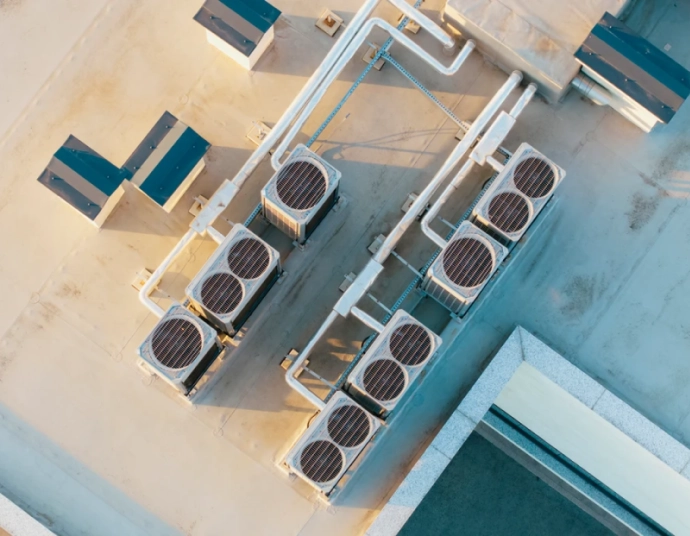
We translate the rewritten safety sections that R-454B and R-32 equipment now requires, using the classification language of ASHRAE 34 and the installer precautions of UL 60335-2-40.
A large share of the US installation workforce works in Spanish. Our field-tested Spanish reads like a foreman wrote it, with charge tables, torque values, and brazing steps that crews actually follow.
Mini-split and VRF documentation from Daikin, Mitsubishi Electric, Gree, and Midea often reaches US distributors in Japanese or Chinese first. We close that gap before your selling season does.
HVAC translation services for an industry rewriting its manuals
The American heating and cooling business is living through its biggest documentation churn in decades. A federally mandated refrigerant transition is forcing manufacturers to reissue installation and service literature for entire product lines. Heat pump shipments have outpaced gas furnaces every year since 2022, pulling new homeowner-facing documents into the market. Ductless and VRF systems engineered in Japan and China keep gaining share. And the crews doing the physical work increasingly read Spanish more comfortably than English.
Every one of those trends generates translation work, and each punishes sloppiness differently. A mistranslated charge table wastes refrigerant. A garbled brazing precaution on an A2L system creates a fire risk. A homeowner manual full of awkward phrasing quietly damages a brand that spent millions on the equipment inside the box. Techniwords has translated HVAC-R documentation for 15 years, for compressor makers, coil manufacturers, controls companies, and the distributors caught between foreign factories and American contractors. The paragraphs below explain how we work and why the details matter.
The A2L transition: safety text that cannot lag behind the hardware
Under the AIM Act, the EPA's HFC phasedown pushed residential and light commercial equipment onto low-GWP refrigerants, and as of 01/01/2025 new systems ship with A2L refrigerants such as R-454B and R-32. A2L means mildly flammable under the ASHRAE 34 classification, and that single property rewrites the paperwork: leak sensor requirements, minimum room areas, dedicated recovery equipment, nitrogen-only brazing procedures, and new field charging limits calculated per UL 60335-2-40 and ASHRAE 15.
Manufacturers have had to reissue installation instructions, service bulletins, and labels for whole catalogs at once, and the translated versions must move at the same speed as the English. A distributor cannot ship an R-454B condensing unit to a Spanish-speaking crew with safety text written for R-410A. When we translate A2L material, our linguists work against the published terminology of the standards themselves, so "refrigerant detection system," "releasable charge," and "minimum conditioned area" stay consistent from the label to the manual to the training deck. We also translate the service bulletins that explain what changed and why, because a technician who understands the reasoning follows the procedure.
Worth pinning to the shop wall: A2L refrigerants like R-454B are classified as mildly flammable under ASHRAE 34, and UL 60335-2-40 ties allowable charge to room size. That calculation appears in the installation instructions, which means a translation error in one table can put an otherwise compliant install out of spec.
The HVAC documents we translate most
Heating and cooling equipment travels with a predictable paper trail, and we have a dedicated page for each document type:
- Installation instructions. Clearances, line set limits, electrical connections, commissioning checks. Our installation guide translation work covers everything from single-zone mini-splits to applied rooftop units.
- Owner and operator manuals. We translate homeowner user manuals and thermostat guides in plain language a non-technical reader can follow.
- Service and repair literature. Fault code tables, refrigerant circuit diagrams, and board-level diagnostics. See our service manual translation services for how we handle multi-hundred-page technical service manuals.
- Labels and signage. Flammability pictograms, charge labels, and lockout warnings. Details on translating warning labels with their space constraints and regulatory phrasing.
- Installer and technician training. Certification courses, e-learning modules, and hands-on lab guides for dealer networks.
Most manufacturer engagements combine three or four of these, tied together by one glossary so the fault code named in the service manual matches the one on the display and in the training slides.
Spanish is a jobsite language, not a nice-to-have
Ask any mechanical contractor in Texas, Florida, Arizona, or California who actually sets the equipment. Hispanic workers make up a large and growing share of the US HVAC installation workforce, and on residential crews in the Sun Belt they are frequently the majority. The EPA acknowledged this reality long ago: the Section 608 technician certification exam, required for anyone who handles refrigerants, is widely offered in Spanish.
Documentation practice has lagged behind the exam. Too many crews work from English-only instructions, which in practice means the one bilingual crew member paraphrases on the fly, and the paraphrase is what gets installed. Manufacturers who ship real Spanish technical translation alongside the English see fewer installation-related warranty claims and fewer support calls, and their distributors know it. We translate into a neutral Latin American Spanish that reads naturally to crews from Mexico, Central America, and the Caribbean alike, and we test terminology choices against what technicians actually say in the field: a term that is textbook-correct but unused on jobsites gets a parenthetical the first time it appears.
The same logic extends to training. OSHA expects safety training to be delivered in a language workers understand, and GFSI-style dealer audits increasingly check it. We localize complete installer curricula, from slide decks to the written quiz that documents competency; this page describes that work in depth.
Mini-splits and VRF: documentation that lands in Japanese and Chinese
Ductless has been the fastest-moving product category in American HVAC for a decade, and nearly all of it is engineered in Asia. Daikin, Mitsubishi Electric, and Fujitsu General write their deepest service literature in Japanese. Gree and Midea, which also manufacture for many North American brand names, document in Chinese. The polished English brochure usually exists; the 400-page VRF engineering data book, the inverter board diagnostic flowcharts, and the mid-cycle service bulletins often do not, or they arrive as machine-translated drafts nobody checked.
This is a core specialty for us. Our Japanese team handles refrigerant circuit descriptions, inverter control logic, and the dense tabular layouts Japanese engineering documents favor. For Chinese source material, our Simplified Chinese specialists work with factory documentation from Guangdong and Zhuhai, including the OEM manuals behind American private labels. In both pairs we rebuild the document in your US template with imperial units first and metric in parentheses, Fahrenheit ahead of Celsius, and wire gauges in AWG, because a service manual that makes a technician convert units on a rooftop is a service manual that gets ignored.
The R in HVAC-R: commercial refrigeration has its own paper trail
Comfort cooling gets the headlines, but the refrigeration side of the trade generates documentation that is denser and more heavily regulated. A supermarket rack system, a cold storage warehouse, or a food processing chiller runs continuously, holds hundreds of pounds of refrigerant, and answers to rules that residential equipment never meets. EPA regulations under Section 608 impose leak inspection and repair obligations on appliances with charges of 50 pounds or more, along with recordkeeping that survives audits, and service contractors need those requirements spelled out in the languages their technicians read.
The equipment itself is going through its own transition. CO2 transcritical racks, which European manufacturers pioneered, are spreading through American grocery chains, and they arrive with documentation written first in Italian, German, or Danish. CO2 systems behave differently from anything a technician trained on HFCs has touched: operating pressures above 1,000 psi, gas coolers instead of condensers, flash gas bypass valves, and control sequences with no HFC equivalent. A translated manual that reaches for familiar HFC vocabulary because the translator did not know better produces text that is fluent, plausible, and wrong. Our refrigeration work keeps the CO2-specific terminology intact and adds unit conversions the source never needed, since European documents give pressures in bar and American gauges read psi.
Ammonia refrigeration adds one more layer. Industrial facilities above the 10,000-pound threshold fall under OSHA process safety management, and the operating procedures, mechanical integrity records, and emergency plans that regime requires are exactly the kind of material plant crews must be able to read without a bilingual intermediary. We translate those procedure sets routinely, most often into Spanish for cold storage and food processing sites.
AHRI, ASHRAE, and the ratings vocabulary that sells equipment
American HVAC runs on certified ratings, and the vocabulary changed recently enough that even native English marketing teams stumble. The 2023 adoption of the M1 test procedure replaced SEER, EER, and HSPF with SEER2, EER2, and HSPF2, with different values for the same hardware. Translated spec sheets, catalogs, and dealer materials must use the right generation of metric for the right market, and a document that mixes them misleads buyers.
| Term | What it measures | Translation risk |
|---|---|---|
| SEER2 | Seasonal cooling efficiency under the M1 external static pressure test | Rendered as generic "efficiency ratio," losing the regulatory distinction from SEER |
| HSPF2 | Seasonal heat pump heating efficiency | Confused with COP in documents translated from metric-market sources |
| AHRI Certified | Performance verified against the AHRI directory listing | Softened to "certified quality," which claims something different |
| Ton (of refrigeration) | 12,000 BTU/h of cooling capacity | Translated as a unit of weight in careless work from kW-based sources |
| Turndown ratio | Modulation range of inverter compressors | Flattened into "speed range," obscuring a key VRF selling point |
Our HVAC glossaries encode these distinctions once per client and enforce them across every document, so the spec sheet, the catalog page, and the proposal all speak the same certified language. When a foreign source document quotes capacity in kilowatts at ISO test conditions, we flag the mismatch with AHRI conditions rather than silently converting, because those numbers are not interchangeable.
Heat pumps, rebates, and paperwork for homeowners
Federal incentives put heat pumps in front of millions of households that had never considered one. The Section 25C tax credit covers up to $2,000 for qualifying heat pumps, and state-run Home Energy Rebates funded by the Inflation Reduction Act add income-based amounts on top. Contractors chasing that demand need homeowner-facing documents in the languages their markets speak: quotes, scope-of-work descriptions, operation guides, and the maintenance schedule that keeps the warranty valid.
Utility and state rebate programs frequently require documentation of the installed equipment and, in several states, provide consumer materials in Spanish and other languages. We prepare bilingual homeowner packages that match the program's terminology, so the model number on the AHRI certificate, the invoice, and the rebate application line up. It is unglamorous work that prevents rejected applications, and rejected applications are how contractors lose referrals.
How an HVAC translation project runs at Techniwords
A recent engagement shows the rhythm. A Japanese equipment maker's US subsidiary needed the technical service manual for a new cold-climate heat pump line ready for a February dealer meeting: 380 pages, Japanese source, with fault trees, refrigerant diagrams, and an appendix of sensor resistance curves. Our project engineer split the manual by chapter, a two-person Japanese team translated against a glossary approved in week one, and an independent reviser compared every segment to the source under our ISO 17100-compliant process. Desktop publishing rebuilt the diagrams with English callouts, and the finished manual, plus a Spanish quick-start extract for installing crews, shipped four days before the meeting.
That structure repeats on every project, whatever the size. Techniwords is an ATA and GALA member agency based in Texas with coverage across the US, and HVAC clients work with the same small team season after season, which is how the glossary and the institutional memory compound. Many also route adjacent work to us, from renewable energy documentation for solar-plus-heat-pump offerings to controls and connectivity material, because the terminology overlaps and the team already knows the product line.
HVAC translation questions, answered
Do you translate the new A2L refrigerant safety instructions?
Yes, and demand for this has been heavy since the 2025 transition. We translate the reissued installation instructions, service bulletins, charge limit tables, and labels for R-454B and R-32 equipment, using the classification vocabulary of ASHRAE 34 and the requirements of UL 60335-2-40. Because a translation error in a charge table or a brazing precaution has safety consequences, every A2L document goes through an independent reviser who checks the translated values and warnings against the source line by line.
Can you translate mini-split and VRF manuals from Daikin, Mitsubishi, or Gree?
This is one of our core HVAC specialties. Our Japanese linguists handle service literature, engineering data books, and inverter diagnostics from Japanese OEMs, and our Simplified Chinese team covers Gree, Midea, and the factory documentation behind many private-label brands. We deliver in your US template with imperial units first, Fahrenheit before Celsius, and AWG wire sizes, and we rebuild diagrams and tabular layouts so the English edition looks like it was written here, not converted.
Can you produce Spanish materials for our installer network?
Yes. We translate installation instructions, quick-start guides, safety talks, and full certification curricula into a neutral Latin American Spanish that reads naturally to crews from different countries. Terminology is checked against real jobsite usage, not just dictionaries, and training packages include the written quizzes that document competency for OSHA and insurance purposes. Manufacturers typically see fewer installation-related warranty claims once crews get instructions they can read directly instead of secondhand paraphrases.
Do you understand AHRI ratings and SEER2 terminology?
We do, and it matters more than it looks. Since the M1 test procedure took effect, SEER2, EER2, and HSPF2 are distinct regulated metrics, not stylistic variants of the old names. Our glossaries lock the correct generation of each metric per document and per market, and when a foreign source quotes performance in kilowatts at ISO conditions we flag the difference from AHRI rating conditions instead of silently converting. Spec sheets, catalogs, and proposals all stay consistent with the AHRI directory listing.
Can you help with heat pump documents tied to rebate programs?
Yes. We prepare bilingual homeowner packages for contractors and manufacturers participating in Section 25C tax credit sales and state Home Energy Rebates: operation guides, scope-of-work documents, maintenance schedules, and the supporting paperwork where model numbers must match the AHRI certificate exactly. Several state programs supply consumer materials in Spanish, and we align our terminology with those official documents so nothing in the homeowner's folder contradicts what the program publishes.
How fast can you turn around a full product line of manuals?
A single 40-page installation manual typically takes 5–7 business days including revision and layout. For product line launches, where a dozen models share most of their content, we translate the common core once, then process the model-specific deltas, which compresses the calendar and the cost considerably. A recent 380-page Japanese service manual shipped in six weeks with a Spanish extract included. Send your file list and target date and we will map the schedule before you commit.
Cooling season will not wait for your manuals
Whether you are reissuing A2L literature, importing a VRF data book from Japan, or arming a dealer network with Spanish training, send us the files. You will get an itemized quote and a delivery schedule that beats your launch date.
Get a Free Quote