Clean Energy
Renewable Energy Translation Services
Techniwords translates O&M manuals, installation guides, and safety signage for the wind, solar, and battery storage projects being built across the United States. We move documentation from the languages it arrives in, German, Danish, Chinese, and Korean, into English and Spanish your crews can act on.
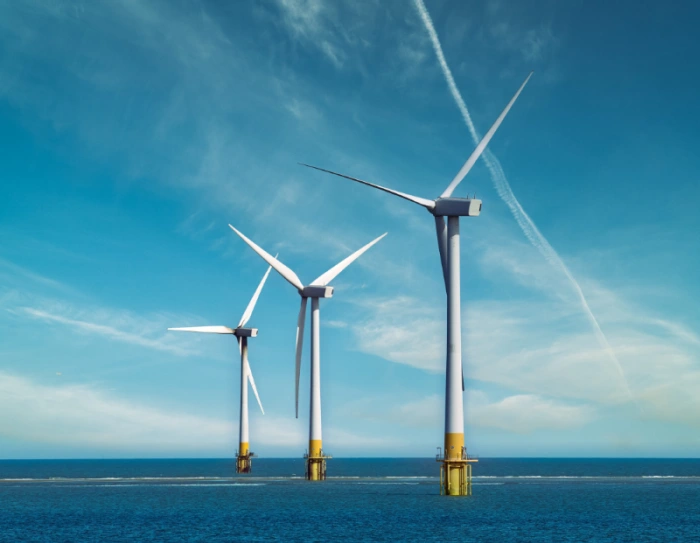
Vestas and Siemens Gamesa service documentation originates in Danish and German. We translate bulletins, torque tables, and O&M procedures with the OEM's own terminology.
Manuals from Chinese and Korean manufacturers, UL 9540A test reports, and NFPA 855 emergency response plans, handled by linguists who know a PCS from a PPC.
Installation instructions, lockout-tagout procedures, and tailgate training written in the working Spanish of the technicians building American solar and wind capacity.
Renewable Energy Translation Services for an Imported Technology Stack
The American clean energy buildout is a domestic construction boom running on foreign engineering. Turbines designed in Denmark and Germany, inverters and modules manufactured in China, battery cells from Korea, and transformers from everywhere spin together on project sites from West Texas to upstate New York. The Inflation Reduction Act accelerated all of it: the United States installed roughly 50 gigawatts of new solar capacity in 2024 alone, and grid-scale battery storage more than doubled in two years. Every megawatt of that equipment arrives with documentation, and a large share of it was never written in English. Renewable energy translation services close the gap between the language the OEM engineers wrote in and the language the site crew reads.
Techniwords has translated for the energy sector for 15 years, from wind O&M libraries to inverter firmware release notes. Our translators are certified specialists in power generation and electrical equipment, every deliverable goes through a full independent revision under our ISO 17100-compliant process, and we hold memberships in the American Translators Association and GALA. What follows is where that experience gets applied.
Wind Turbine O&M Documentation from Danish and German Sources
The US wind fleet is dominated by European technology. Vestas engineering documentation originates in Danish, Siemens Gamesa material draws on German and Spanish engineering organizations, and Nordex adds another German documentation stream. Owners and independent service providers who take over maintenance after the warranty period inherit service bulletins, torque specifications, hydraulic schematics, and troubleshooting guides that were translated hastily, partially, or not at all. A technician 300 feet up a tower with a marginal translation of a pitch system procedure is a safety problem, more than a productivity problem.
We rebuild those libraries properly. Our team specializes in translating O&M and maintenance manuals for nacelle, hub, and tower work, preserving torque values in both N·m and ft-lb where the OEM provides them, keeping component designations aligned with the parts catalog, and rendering warning structures so they keep their severity levels. Working from German technical sources is a daily exercise here, and our Danish capability covers the Vestas documentation stream that dominates so many American fleets. Service bulletins get priority handling because they often carry retrofit deadlines tied to warranty claims.
Solar Inverters, Racking, and Manuals That Cross the Pacific
Utility-scale solar brings a different documentation problem: enormous volume from Chinese manufacturers whose English manuals are themselves translations, and often poor ones. Inverter installation and commissioning guides, string combiner documentation, tracker manuals, and SCADA integration notes arrive with grammar that obscures grounding requirements and clearance distances that matter under the National Electrical Code. We work directly from Simplified Chinese source files whenever the client can obtain them, because translating from the original beats repairing a bad English intermediate every time.
Korean manufacturers anchor the battery side of the supply chain, and their engineering documents, cell specifications, and factory test reports come to us through our Korean team, described on this page. Across both segments, the deliverable that matters most on site is the installation guide translation: crews assemble racking, land conductors, and torque terminations directly from those pages, so we verify every numeric value against the source twice, once in translation and once in independent revision. When an OEM's English glossary conflicts with US trade usage, we follow the NEC term and note the OEM's variant in parentheses at first occurrence.
Battery Storage, NFPA 855, and Documents Fire Marshals Read
Grid-scale battery energy storage is the fastest-moving segment in American power, and it is also the one where documentation faces the toughest external reader: the authority having jurisdiction. NFPA 855 governs the installation of stationary energy storage systems, and permit packages routinely require hazard mitigation analyses, UL 9540 listings, UL 9540A large-scale fire test data, and emergency response plans that local fire departments will actually use. When the underlying test reports and engineering documents exist in Korean or Chinese, someone must produce an English version precise enough for a fire protection engineer to stake a permit on.
That is our lane. We translate cell and module specifications, battery management system documentation, thermal runaway test data, and emergency response procedures, and we prepare the site signage that goes with them. Our work on translating warning labels and site signage covers NFPA 704 placards, high-voltage warnings, and bilingual emergency instructions posted at BESS enclosures, formatted to the character limits that physical labels impose.
Wind turbine service technician is projected to be among the fastest-growing occupations in the country, with the Bureau of Labor Statistics forecasting roughly 60 percent growth from 2023 to 2033, and solar installers close behind. The workforce is growing faster than English-only documentation can serve it.
Commissioning, NERC, and the Paper Trail to Interconnection
Between mechanical completion and commercial operation stands a wall of paperwork. Capacity tests, SCADA point verification, grid code compliance studies, and utility witness tests all generate records that owners, lenders, and off-takers review, and on projects with foreign EPC contractors or OEM commissioning engineers, those records are born multilingual. Our support for commissioning report translation keeps punch lists, test certificates, and turnover packages consistent so the independent engineer signs off without a document round-trip to a headquarters overseas.
Registered generator owners and operators also answer to NERC reliability standards once they interconnect, and compliance programs generate procedures and evidence that plant staff must apply regardless of their first language. We translate compliance procedures and operator instructions so control room and field personnel work from the same text the compliance team files. Where a standard's defined terms appear, we keep the NERC glossary term in English with a translated explanation, because auditors search for the English term.
Training the Fastest-Growing Energy Workforce in Spanish
Solar and wind construction crews in Texas, California, Arizona, and the Southeast are heavily Spanish-speaking, and the O&M workforce increasingly is too. OSHA obligations to train workers in a language they understand apply on a solar site exactly as they do in a factory, and developers have learned that bilingual programs cut both incident rates and rework. We produce Spanish versions of technician curricula, working at height and rescue procedures, electrical safety modules, and equipment familiarization guides; our approach to courseware is detailed here. The Spanish we deliver comes from our Spanish technical translation group, which writes in Latin American field usage rather than textbook Castilian.
A typical package pairs the translated training deck with quick-reference cards for the truck and bilingual signage for the laydown yard, so the language of the classroom matches the language on the equipment. Clients tell us the cards outlive the training itself.
One Project, Four Languages: How the Documents Map
| Asset | Typical source languages | Documents we translate |
|---|---|---|
| Wind turbines | Danish, German | O&M manuals, service bulletins, torque tables, troubleshooting trees |
| Solar inverters and trackers | Chinese, Korean | Installation and commissioning guides, SCADA notes, datasheets |
| Battery storage | Korean, Chinese | UL 9540A reports, BMS documentation, emergency response plans |
| Balance of plant | German, Spanish | Transformer manuals, substation procedures, civil quality records |
| Workforce | English into Spanish | Training curricula, LOTO procedures, site signage, toolbox talks |
The table understates one thing: these streams converge. A single storage-plus-solar site can hold Danish turbine heritage next door, Chinese inverters, Korean batteries, and a Spanish-speaking crew, all governed by English-language permits. We assign one project glossary across all of it so "converter," "inverter," and "PCS" never blur into each other between documents.
Offshore Wind: European Practice Meets American Waters
The first commercial-scale offshore wind farms on the US East Coast were built with European turbines, European installation contractors, and largely European engineering documentation. That inheritance runs deep: marshalling port procedures, cable-lay records, and turbine commissioning files arrive shaped by North Sea practice and, frequently, in the working languages of Danish, German, and Dutch project teams. American stakeholders then layer their own requirements on top, from BOEM permitting documents to Coast Guard coordination and Jones Act vessel logistics, all of it in English and all of it referencing the same underlying technical material.
We translate across that seam. Typical assignments include turbine installation method statements rendered into English for US marine warranty surveyors, European grid code compliance studies adapted for a US interconnection filing, and safety management documentation aligned between a European contractor's system and the American operator's OSHA-based program. Crew transfer and service operation vessels add a maritime documentation layer of their own. Offshore work also raises the stakes on consistency: a term that drifts between the installation manual and the emergency response plan will surface during a marine audit, usually at the least convenient moment. The per-project termbase we build for onshore fleets becomes mandatory here, and we extend it to cover vessel, port, and turbine documentation as one vocabulary.
Terminology That Changes Between OEMs, and Why We Track It
Renewable energy vocabulary is young and unsettled. One wind OEM's "pitch cabinet" is another's "hub controller box." Chinese inverter manuals alternate between "grid-tied" and "grid-connected" within a single chapter. Battery documents mix cell, module, rack, and container hierarchies inconsistently, which becomes dangerous when an emergency response plan tells firefighters which enclosure level a procedure applies to. We resolve these collisions with per-fleet termbases: the client's engineers approve one rendering per concept per OEM, and every subsequent bulletin, manual, and training deck inherits it automatically.
Units get the same care. European sources use metric fasteners and N·m; American crews carry ft-lb torque wrenches; both values must appear where the OEM allows conversion and only the original where it does not. Temperature thresholds in battery specifications stay in the source convention with conversions added, never substituted, so warranty disputes can always be traced to the manufacturer's own number.
A Recent Project, and How We Work for Owners, EPCs, and ISPs
Last year an independent service provider took over full-scope maintenance for a repowered wind fleet in the Texas Panhandle and discovered that a third of the OEM's service bulletins existed only in German. We translated 240 bulletins and an 800-page O&M set in five weeks, built a 900-term English-German termbase validated by the client's engineering manager, and now translate each new bulletin within 48 hours of release. The fleet passed its next insurance inspection with documentation cited as a strength, which does not happen often in wind.
Whoever you are in the project stack, the engagement model adapts. Owners usually need libraries rationalized after COD. EPCs need volume during construction and commissioning, on schedule-critical deadlines. OEMs entering the US market need their entire documentation set localized once, properly, with a glossary they keep. If your work spans conventional generation too, our energy sector translation work covers that side of the portfolio with the same team structure.
Renewable Energy Translation FAQ
Can you translate German wind turbine O&M manuals?
Yes, this is one of our core renewable workstreams. We translate O&M manuals, service bulletins, and troubleshooting documentation from German and Danish into English, keeping OEM component designations, torque values, and warning structures exactly aligned with the source. For fleets under service agreements, we set up a termbase per turbine platform so bulletins translated in year three match the manual translated in year one. Native-format files from the OEM produce the best results, but we regularly work from scanned or PDF libraries when that is what the owner inherited.
Our Chinese inverter manuals are hard to follow. Can you fix them?
We can, and the best fix starts from the Simplified Chinese source rather than the flawed English version. Translating from the original recovers grounding requirements, clearance distances, and commissioning steps that the manufacturer's English edition garbled. If the Chinese source is unavailable, we perform a technical revision of the English against the product's electrical documentation and flag every passage where intent is uncertain for the manufacturer to confirm. Either way you end with a manual your electricians and your AHJ can rely on.
Do you produce Spanish materials for solar and wind field crews?
Yes. We translate training curricula, lockout-tagout and electrical safety procedures, work-at-height and rescue plans, toolbox talks, and site signage into Latin American Spanish written for field crews. OSHA expects safety training delivered in a language employees understand, and auditors increasingly ask for documentary proof. We match reading level to the audience, keep equipment names consistent with what is printed on the hardware, and can deliver pocket-format quick reference cards alongside full documents.
What battery storage documentation do you handle?
Cell and module specifications, battery management system documentation, UL 9540 and UL 9540A test reports, hazard mitigation analyses, emergency response plans, and the signage required around BESS enclosures under NFPA 855. Much of this material originates in Korean or Chinese, and precision matters because fire marshals and insurers read the English output. We keep the cell-module-rack-container hierarchy consistent across every document and preserve manufacturer threshold values in their original units with conversions added, never substituted.
How do you manage documentation volumes for an entire wind or solar farm?
With an inventory first. We catalog the documentation set by system and language, agree on priorities with your operations team, and translate in scheduled batches with rolling deliveries, high-consequence procedures first. One translation memory and one termbase cover the whole site, so repeated content across turbine positions or inverter blocks is translated once and reused, which typically cuts cost by 25-40 percent on fleet-scale libraries. You receive a delivery log mapping every translated file to its source document and revision.
Do you work with owners, EPCs, or OEMs?
All three, with different rhythms. Owners and asset managers usually engage us after COD to rationalize inherited libraries and keep pace with service bulletins. EPCs need schedule-critical turnaround during construction and commissioning, often overnight for revised procedures. OEMs entering the US market engage us to localize complete documentation sets and to maintain them release by release. In every case the glossary and translation memory belong to you, so changing vendors or bringing work in-house later costs you nothing in consistency.
Get Your Fleet Documentation Into Working Order
Send us a sample bulletin, an inverter manual, or a list of what your O&M library is missing in English or Spanish. We will return an itemized quote with a batch schedule matched to your maintenance calendar, and your project glossary stays yours from day one.
Get a Free Quote