Industry expertise
Manufacturing Translation Services
We provide manufacturing translation services for the documents that keep American plants running: work instructions, safety training, equipment manuals, and quality systems. Our specialists move production content between English, Spanish, German, and Chinese so every shift reads the same procedure.
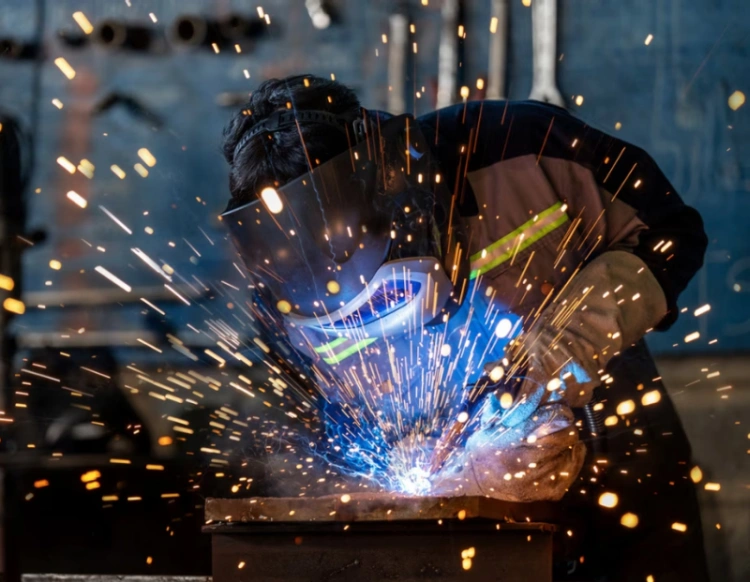
Training modules and work instructions written the way operators, welders, and machinists actually speak on the line.
OSHA expects training in a language workers understand. We translate HazCom, lockout/tagout, and forklift programs so comprehension holds up in an audit.
Multi-site manufacturers get a shared glossary, so a torque spec reads identically in Ohio, Monterrey, and Suzhou.
American manufacturing runs in more than one language
US manufacturing employs roughly 12.9 million people, and a large share of them do not read English as a first language. Walk any production floor in Texas, California, or the Carolinas and you will hear Spanish at the press brakes, in the paint booth, and around the packaging cells. At the same time, the equipment those workers operate often arrived from Germany, Japan, or China with documentation written for a different market entirely.
That double gap is exactly where manufacturing translation services earn their keep. The plant needs its own procedures moved into the languages of its workforce, and it needs incoming supplier and OEM documentation moved into English so maintenance crews and engineers can trust what they read. Reshoring has made the second problem more common than most executives expect: when a production line relocates from Shenzhen or Stuttgart to South Carolina, thousands of pages of machine documentation relocate with it.
Techniwords has been translating factory documentation for 15 years, from single work instructions to complete plant handovers. We are members of ATA and GALA, and every project runs through an ISO 17100-compliant process with an independent reviewer who never saw the first draft.
Factory documentation we translate every week
Most manufacturing engagements start with one urgent document and grow into a program. A safety manager needs the HazCom refresher in Spanish before the next quarterly training. A maintenance lead needs the English version of a German gearbox manual before the annual shutdown. From there, plants typically bring us their controlled documents in batches.
| Document | Typical direction | What matters most |
|---|---|---|
| Work instructions and operating procedures | English to Spanish | Short imperative sentences, matching photo callouts |
| Equipment and OEM manuals | German, Japanese, Chinese to English | Correct component names, warnings kept intact |
| Quality system documents | Both directions | Consistency with audit terminology |
| Safety training and signage | English to Spanish | Comprehension by workers with varied literacy |
| Export documentation under USMCA | English to Spanish and French | Regulatory labeling requirements per country |
The document pages on this site go deeper on each format. We handle translating operating instructions for production equipment, and our SOP translation services cover everything from sanitation procedures to changeover checklists. For machines you ship to customers, user manual translation is usually the first deliverable a distributor asks for. And because auditors read them line by line, our team translates quality manuals with the same document-control discipline your QMS applies internally.
OSHA 29 CFR 1910 and training workers can actually follow
OSHA's general industry standards in 29 CFR 1910 contain dozens of training requirements, and the agency has been explicit about language. Its Training Standards Policy Statement of April 28, 2010 directs compliance officers to check whether training was delivered in a language and vocabulary employees understand. If your lockout/tagout training under 29 CFR 1910.147 was delivered in English to a crew that discusses the job in Spanish, an inspector can treat that training as not having happened at all.
The same logic applies to hazard communication under 29 CFR 1910.1200, to powered industrial truck certification under 29 CFR 1910.178, and to emergency action plans. Citations in these areas regularly follow incidents where a worker signed a training roster for material they could not read.
OSHA does not accept a signature as proof of comprehension. The 2010 policy memo instructs inspectors to verify that instruction matched the language and vocabulary of the workforce. A translated training file, dated and version-controlled, is the cheapest audit defense a plant can buy.
We translate complete training programs, including the quiz banks and sign-off sheets, and we adapt reading level to the floor. A safety module written for a corporate EHS audience needs rewriting, not just translating, before a second-shift temp can learn from it.
Work instructions at the station, where wording meets takt time
A work instruction is not prose. It is a numbered sequence an operator scans in seconds between cycles, usually mounted at the station next to reference photos. Translating one badly creates a subtle hazard: the Spanish version drifts from the English, revisions get applied to one language and not the other, and six months later two shifts are building the part differently.
Our approach keeps both languages locked to the same revision. We preserve step numbering, torque values, and photo references exactly, we mirror the document control block, and we flag any step where the source text is ambiguous rather than guessing. Plants running lean programs tell us the translated instructions read like they were written at the gemba, because that is where we take our terminology from. The same care goes into warning labels and floor signage, where a mistranslated pinch-point warning is a recordable injury waiting for a date.
Reshoring, acquisitions, and the plant that arrives in another language
Foreign direct investment keeps building American factories. German Mittelstand firms, Japanese tier-one suppliers, and Chinese appliance makers have all opened or acquired US plants over the past decade, and each one imports a documentation stack in its home language. Add domestic reshoring projects, where a company brings production back from Asia along with every fixture drawing and process sheet, and you get a recurring situation: a US workforce standing next to equipment it cannot read about.
A recent project makes the shape of this work concrete. A fastener manufacturer in the Midwest was acquired by a German group that transferred two cold-heading lines from Baden-Wurttemberg. We received 1,400 pages of Betriebsanleitungen, maintenance schedules, and electrical schematics, built a bilingual glossary with the customer's maintenance supervisor in week one, and delivered English documentation in staged batches timed to the commissioning plan. The maintenance team was running planned preventive work from the English manuals before the second line was even energized.
If your incoming documentation is in German, this dedicated page explains how we handle DIN references, compound terminology, and translated safety chapters.
Exporting under USMCA: Spanish and French are not optional
US manufacturers shipped over $500 billion in goods to Mexico and Canada in recent years, and USMCA keeps most of that trade tariff-free only when the paperwork holds up. Product documentation is part of that paperwork. Mexico's NOM labeling standards, including NOM-050-SCFI-2004 for general consumer information, require Spanish on commercial labeling. Canada requires bilingual English and French labeling for consumer products under federal packaging rules, and Quebec's Charter of the French Language extends French requirements to accompanying documentation such as manuals and warranties.
For exporters this means the user manual, the packaging, and the warranty card need professional treatment before the truck crosses the border, not after a distributor complains. We build export documentation sets as a package so the label, the manual, and the declaration reference the same product names in every language.
Timing matters here as much as accuracy. Customs brokers and importing distributors work to shipping windows, and a manual held up in translation can delay an entire container. We schedule export documentation against your ship dates, and repeat exporters keep a standing translation memory with us so a product variant only costs the delta, not a full retranslation.
Terminology that separates plant people from everyone else
Manufacturing vocabulary punishes generalist translators. In Spanish, a die can be a troquel or a dado depending on the process and the country; a jig and a fixture collapse into one careless word unless the translator knows machining. German compresses an entire assembly into a single compound noun, and Chinese equipment manuals often reuse one character pair for both spindle and shaft. Get these wrong and the maintenance tech loses trust in the whole document.
Our manufacturing linguists are certified translators who have spent years inside industrial content, and several worked in production or maintenance roles before translating. Every account gets a living termbase, reviewed by your engineers once and enforced by us afterward. This is how factory documentation translation stays consistent when volume two arrives eight months after volume one, or when three plants localize the same corporate procedure in the same quarter.
Why Spanish, German, and Chinese lead in this sector
Three language pairs cover most of the manufacturing work we see, and each exists for a different reason. Spanish is the language of the US industrial workforce and of the Mexican supply base, so it dominates training, work instructions, and cross-border specs; our Spanish technical translation team includes linguists for both US shop-floor usage and Mexican regulatory usage, which are not the same audience. German arrives with the machines: presses, CNC centers, packaging lines, and automation components from suppliers whose English documentation is often a thin summary of the German original. Chinese flows in through sourcing, from supplier quality agreements to inspection criteria for contract-manufactured components, and we translate it with reviewers who know the difference between a spec written in Shenzhen and one written for Shenzhen.
Plants dealing with other inbound languages, Japanese robotics documentation for instance, can see other sectors we serve for how we staff those pairs.
Supplier quality documentation keeps the sourcing loop honest
Sourcing from overseas creates a second documentation stream that plants often underestimate. Supplier quality agreements, incoming inspection criteria, control plans, and corrective action requests all cross the language barrier twice: once when you send requirements out, and again when the supplier's evidence comes back. A dimension tolerance that reads clearly in your English drawing package can come back from a Chinese contract manufacturer with an inspection report measured against a different interpretation, and nobody notices until receiving inspection rejects a shipment.
We translate these documents in both directions with the same reviewer pool, so the engineer who translated your inspection criteria into Simplified Chinese also checks the supplier's returned test data against those criteria. Purchasing teams use this on supplier audits too: an auditor walking a supplier floor in Dongguan with a properly translated checklist finds problems that a borrowed interpreter would smooth over. The pattern holds for Mexican suppliers under USMCA, where a bilingual control plan keeps your Monterrey supplier and your Ohio receiving dock measuring the same feature the same way.
For plants that certify suppliers formally, we also translate the supporting records: process capability studies, first article inspection reports, and the certificates that accompany each lot. Getting these right shortens supplier onboarding by weeks, because your quality engineers stop re-requesting documents they could not verify the first time.
How a manufacturing translation project runs
Every project starts with a file audit. We identify the formats in play, typically Word and PDF plus InDesign for manuals and Excel exports from a PLM or document control system, and we quote by document with an itemized breakdown. Translation is done by a specialist in your process area, then revised by a second independent linguist under our ISO 17100-compliant workflow. Terminology checks run against your termbase before anything comes back to you.
Delivery matches your document control needs: translated files carry the same numbering and revision level as the source, so your QMS can treat them as controlled copies. For recurring clients we keep translation memories per plant and per product line, which cuts cost on revisions because you only pay for what changed. From our base in Texas we support manufacturers in every US state, with turnaround commitments in writing on every quote.
Manufacturing translation questions, answered
Can you translate our OSHA training program into Spanish?
Yes, and this is one of our most requested manufacturing services. We translate complete programs: presentations, handouts, quizzes, and sign-off forms for topics like hazard communication, lockout/tagout, forklift operation, and emergency action plans. We adapt vocabulary to the shop floor rather than producing textbook Spanish, and we can match the reading level to your workforce. Deliverables are version-controlled so you can show an OSHA inspector exactly which translated materials were used on which date.
We acquired a plant whose documentation is in German. Where do we start?
Start with a triage, not a bulk order. We review the documentation set with your maintenance and quality leads, identify what is safety-relevant or needed for daily operation, and translate that first. Equipment manuals and preventive maintenance schedules usually lead, followed by electrical schematics and quality records. We build a bilingual glossary in the first week so terminology stays stable across the whole transfer, and we deliver in batches sequenced to your commissioning or integration plan.
What volumes can you handle for a plant or multi-plant rollout?
Single documents to full documentation systems. A typical plant rollout involves 200–600 controlled documents; we have delivered transfers above 1,400 pages by staging work across a coordinated team of specialist translators sharing one translation memory and one termbase. Because the memory grows as the project advances, later batches move faster and cost less. We provide a delivery schedule up front, mapped to your internal deadlines, and a single project manager owns the whole rollout.
How do you keep terminology consistent across multiple sites?
With a client-specific termbase that every translator on your account must follow. We build it from your existing documents and a short review session with your engineers, then lock it. When plants in different states, or in the US and Mexico, translate the same corporate procedure, the same approved terms appear in every version. Quarterly termbase reviews catch new product names and process changes, and translation memories per site prevent one plant's phrasing from drifting away from another's.
What are typical turnaround times for factory documentation?
A set of work instructions or a training module usually takes 2–4 business days. A full equipment manual of 100–150 pages runs about two weeks including independent revision. Large transfers are scheduled in batches so your team starts receiving usable documents within the first week rather than waiting for the entire set. If a line is down or an audit date moved up, tell us: we run rush lanes with extended team hours and can commit to firm dates on the quote.
Do you work with our existing file formats?
Yes. We deliver back in the format you use: Word, Excel, PowerPoint, InDesign, FrameMaker, and PDF, plus XML or CSV exports from PLM and document control systems. Translated manuals come back with layout intact, including callouts, tables, and figure references, so your document control team publishes rather than rebuilds. For scanned legacy documents we recreate the file before translating, and we keep source and target in matching revision levels for your QMS.
Put your plant documentation in every language your people read
Send us a sample work instruction, a training module, or the manual for that machine nobody can read yet. You will get an itemized quote, a proposed glossary approach, and a firm delivery date within one business hour.
Get a Free Quote