Chips & Electronics
Semiconductor Translation Services
Techniwords translates the documentation behind America's new fabs: process specs, cleanroom SOPs, and training material arriving from Taiwan, Korea, and Japan. Our linguists speak the language of wafers, and our confidentiality practices match an industry where the process is the product.
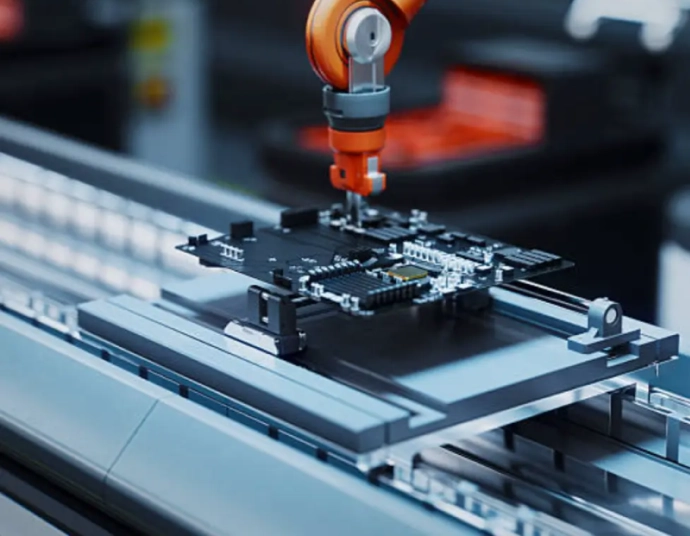
Translators who know lithography from metrology and will not confuse a reticle with a mask blank, working from Mandarin, Korean, and Japanese sources.
Min, typ, and max columns, tolerances, and unit prefixes cross languages untouched, verified in a dedicated numeric QA pass on every datasheet.
Restricted project teams, named-linguist NDAs, and no consumer AI tools touching your recipes, layouts, or yield data at any stage.
Semiconductor Translation Services for the CHIPS Act Buildout
The United States is rebuilding its chipmaking capacity at a pace the industry has not seen in decades, and almost all of that capacity arrives speaking another language. Semiconductor translation services sit in the middle of this transfer: TSMC's Arizona fabs run on process knowledge developed in Hsinchu and documented in Chinese, Samsung's Taylor, Texas site draws on Korean engineering documentation, and the tool sets inside both come with Japanese, German, and Dutch manuals. The CHIPS and Science Act put $52.7 billion behind this buildout, but no appropriation translates a work instruction.
The stakes of getting it wrong are unusual. In most industries a mistranslated procedure causes rework. In a fab, an ambiguous instruction on a diffusion step can quietly degrade yield for weeks before anyone traces the cause back to a document. That is why our semiconductor work is staffed exclusively by translators with electronics backgrounds, why every file passes independent revision under our ISO 17100-compliant process, and why we build the terminology base before we translate the first procedure, not after the tenth complaint.
We have spent 15 years translating for hardware manufacturers, and the semiconductor practice has grown into one of our deepest specializations, covering everyone from fab operators to fabless design houses, packaging and test providers, and the equipment makers who supply them all.
Moving a Fab Across the Pacific: Process Documentation from Mandarin and Korean
A technology transfer package for a single process module can run to thousands of pages: process of record descriptions, tool qualification records, inspection criteria, excursion response procedures. When the source fab is in Taiwan, that package is written in Traditional Chinese full of Taiwan-specific fab jargon; a mainland-trained translator without fab experience will stumble on terms that never appear in general dictionaries. Our Chinese team covers both scripts and both terminological traditions, and our Simplified Chinese technical translation page describes how we manage script and regional variants on the same program.
Korean documentation brings its own patterns. Korean engineering writing leans on sino-Korean compounds and in-house abbreviations that vary from company to company, so the first weeks of a Korean transfer project go into decoding the client's internal shorthand and fixing it in a glossary that client engineers approve line by line. Our Korean-to-English specialists have handled qualification protocols, equipment interlock descriptions, and failure analysis reports for suppliers following their customers to Texas and Arizona.
One engagement illustrates the scale. A supplier supporting a Southwest fab ramp needed roughly 1,200 pages of Mandarin work instructions and inspection procedures in English before a US technician cohort finished onboarding. We built an 800-term process glossary in the first two weeks, validated it with the client's process engineers, then ran parallel translation teams against it. The full set was delivered in twelve weeks with terminology consistency above 99% as measured by our QA tooling, and the client's trainers reported zero terminology escalations during the first onboarding class.
Cleanroom SOPs and the Language of Contamination Control
Cleanroom procedures are where translation precision meets behavior. Gowning sequences, airlock protocols, wipe-down frequencies, and material pass-through rules are written to be executed identically by every person on every shift. We translate these against the vocabulary of ISO 14644-1 cleanliness classes, so a procedure written for an ISO Class 5 space keeps its classification logic intact rather than drifting into the older Class 100 vocabulary unless the client standardizes on it.
Our SOP translation services handle the structural side as well: step numbering, caution placement, and revision blocks are preserved so a translated procedure can drop straight into the client's document control system. Where fabs operate bilingual floors during ramp, we produce side-by-side English and source-language versions with synchronized step numbers, which trainers tell us cuts shadowing time measurably because the mentor and trainee are literally on the same line.
Contamination control language has traps of its own. Particle, defect, and contamination are distinct concepts in fab usage with distinct metrics behind them, and several Asian languages use overlapping terms for all three. Our glossaries pin each to its metric so the translated SOP never blurs a particle count with a defect density.
Datasheets: Min, Typ, Max, and No Room for Interpretation
Component datasheets are contracts written in tables. Absolute maximum ratings, recommended operating conditions, and electrical characteristics with their min, typ, and max columns must cross languages without a single value shifting, and the conditions column, the fine print stating test temperature, supply voltage, and load, is where subtle translation errors hide. We run datasheet translation through a two-layer check: linguistic revision by a second translator, then a numeric comparison pass that verifies every figure, unit, and prefix against the source, because the difference between mA and µA has ended products.
For electronics manufacturers we also translate the documents that surround the datasheet: application notes, errata sheets, PCN notices for process or die revisions, and reliability reports citing JEDEC standards such as JESD22 test methods. Each keeps its standard references exactly as published, because a customer qualification engineer will check them.
RoHS, REACH, and Compliance Declarations for Electronics Exporters
Electronics that cross borders drag a compliance file behind them. EU RoHS Directive 2011/65/EU restricts ten substances, REACH Regulation (EC) No 1907/2006 adds a candidate list that grows twice a year, and customers increasingly demand declarations in their own language before a part number gets onto an approved vendor list. We translate substance declarations, IPC-1752A material declaration data, and conflict minerals reporting alongside the certificates themselves; read our detailed guide for how declarations of conformity are handled so legal wording stays legally exact.
Two things make electronics compliance translation unforgiving. First, substance names: bis(2-ethylhexyl) phthalate does not tolerate creative rewording in any language, and CAS numbers must be reproduced digit for digit. Second, scope statements: whether a declaration covers a part, a family, or a manufacturing site changes its legal weight, and translators without regulatory experience routinely flatten those distinctions. Ours are trained not to, and the independent reviser checks scope language against the source as a named QA step.
The scale of the transfer: between the CHIPS and Science Act's $52.7 billion in incentives and the private investment it triggered, semiconductor manufacturers announced projects worth hundreds of billions of dollars across Arizona, Texas, Ohio, and New York. Nearly every one of those projects depends on process documentation first written in Chinese, Korean, or Japanese, which makes translation capacity a quiet dependency of fab ramp schedules.
Wafer and Fab Vocabulary: A Specialized Lexicon
Fab terminology is narrow, dense, and merciless toward generalists. The table shows a few areas where our glossaries do the heavy lifting.
| Process area | Sample terminology | Common translation failure |
|---|---|---|
| Photolithography | Reticle, overlay, critical dimension, develop | Reticle and photomask conflated; CD translated as physical size rather than the measured parameter |
| Etch | Selectivity, anisotropy, endpoint detection | Selectivity rendered as generic precision, erasing the ratio it actually names |
| Deposition | CVD, ALD, step coverage, conformality | Step coverage translated literally as stair covering in more than one inbound document we have repaired |
| CMP | Slurry, dishing, erosion, pad conditioning | Dishing and erosion merged into one word, though they are distinct defects with distinct causes |
| Metrology and yield | Defect density, bin map, excursion, SPC limits | Excursion softened to deviation, losing the alarm semantics fabs attach to the word |
| Assembly and test | Wire bond, flip chip, burn-in, known good die | Known good die paraphrased instead of kept as the industry term of art |
Every project we run extends a living semiconductor termbase that now holds several thousand validated entries per language pair. New clients inherit that foundation on day one and layer their house terminology on top of it.
Training an American Workforce on Equipment Documented Abroad
The workforce question is the CHIPS era's hardest problem. Fabs in Arizona and Texas are hiring thousands of technicians who have never set foot in a cleanroom, and the curricula available to train them often exist only in the source fab's language. We spend a large share of our semiconductor hours translating training material for new fab technicians: slide decks, e-learning modules, competency checklists, and simulator scripts, adapted so a trainee in Chandler reads natural American English rather than translated Mandarin sentence structures.
Training translation also means cultural adaptation with a light touch. Source material sometimes assumes shift customs, seniority conventions, or abbreviation habits that mean nothing to a US hire. We flag those passages and propose adapted wording rather than silently transposing them. Where clients need validated learning, we translate assessments too, keeping question difficulty stable across languages so pass rates remain comparable between the source fab and the US site. Related qualification paperwork, including validation protocol translation for tools and processes being requalified stateside, runs through the same engineering-reviewed pipeline.
Beyond the Fab: Electronics Translation for Equipment Makers and EMS Providers
Semiconductors sit at the center of this practice, but the electronics translation work around them is just as demanding. The tools inside a fab arrive with their own documentation ecosystems, much of it Japanese in origin: lithography, deposition, and metrology equipment ships with operation manuals, maintenance procedures, and error code references that US-based tool owners and field service engineers need in English. We translate these against the same termbase as the process documentation, so the tool manual and the SOP that references it never disagree about what a component is called.
Downstream, electronics manufacturing services providers and PCB assemblers bring us a different document mix: assembly drawings, workmanship criteria referencing IPC-A-610 acceptance classes, solder paste and reflow profiles, and incoming inspection procedures. IPC class distinctions matter here the way cleanliness classes matter in the fab; a Class 2 acceptance criterion translated loosely can pass hardware that a Class 3 customer will reject at source inspection. Our electronics reviewers hold the line on those distinctions because they know what rides on them.
We also support the commercial layer of the electronics supply chain: qualification packages for new suppliers, first article inspection reports, PCN and EOL notices that must reach international customers quickly, and the quality agreements that frame all of it. When a Taiwanese ODM and an American brand negotiate over a shared document, both sides need to be reading the same thing, and that is exactly the standard we translate to.
Confidentiality Where Process Is the Product
Semiconductor process documentation is among the most closely guarded intellectual property on earth, and we treat it that way. Projects run on restricted teams under named-individual NDAs, files move through encrypted transfer only, and nothing your engineers send us is ever fed to public AI tools or retained beyond the contracted period. Clients with stricter requirements can impose their own infrastructure, and several do; we work inside customer-controlled environments when the sensitivity of a recipe or layout demands it.
As a Texas-based company and a member of both the ATA and GALA, we sit within driving distance of the state's new fab corridor and understand the supplier ecosystems forming around it. Electronics work often overlaps with adjacent fields, and clients with board-level or power products frequently combine this service with our electrical engineering translation practice, or with software localization when a product ships with firmware tooling. Whatever the mix, one project manager owns the whole file set, one glossary governs it, and one revision standard applies from the first SOP to the last datasheet.
Semiconductor Translation: What Clients Ask Us
Our fab documentation is in Mandarin. Can you handle a full technology transfer package?
Yes. We routinely take on transfer packages of several thousand pages covering process descriptions, tool qualification records, and inspection criteria. The project starts with a glossary phase validated by your process engineers, then parallel translation teams work against that glossary under one terminology database. We handle both Simplified and Traditional Chinese, which matters because Taiwanese fab documentation uses Taiwan-specific terminology that mainland-trained generalists frequently misread.
Can you translate Korean training material for US technicians?
This is one of our most requested services since the Texas fab announcements. We translate slide decks, e-learning modules, competency checklists, and assessments from Korean into American English, adapting sentence rhythm and examples so trainees read natural instructional prose rather than transposed Korean structures. Assessments are translated with question difficulty held stable, so your pass-rate data stays comparable between the Korean source site and the US facility.
Do your translators actually understand cleanroom protocol terminology?
Our semiconductor team translates against the ISO 14644-1 classification vocabulary and knows the operational difference between particles, defects, and contamination events, each of which carries its own metric in fab usage. Gowning sequences, airlock rules, and pass-through procedures keep their step logic and caution placement intact, so a translated SOP drops into your document control system without restructuring. Fab experience is a staffing requirement for this sector, not a preference.
How do you translate datasheets without breaking min/typ/max tables?
Tables are processed with their structure locked, so values, units, and conditions columns cannot drift during translation. After linguistic revision by a second translator, a separate numeric QA pass compares every figure, unit symbol, and SI prefix against the source file. Standard references such as JEDEC test methods are reproduced exactly as published. The result is a datasheet your customers' qualification engineers can check against the original line by line.
How do you protect proprietary process information?
Restricted project teams work under named-individual NDAs, files move only through encrypted channels, and no public AI tools ever touch your content. Retention periods are contractual, and purging is certified on request. Several clients require us to work entirely inside their own controlled environments, and we do. Confidentiality terms are agreed before any file transfer, and the linguist roster for your project can be disclosed to your security team for approval.
Do you translate RoHS and REACH declarations for electronics?
Yes, along with substance declarations, IPC-1752A material data, and conflict minerals reporting. Substance names and CAS numbers are reproduced exactly, scope statements keep their precise legal reach, and references to Directive 2011/65/EU or Regulation (EC) No 1907/2006 stay as cited. Because the REACH candidate list is updated twice a year, we also offer standing arrangements that keep translated declaration libraries current as your compliance team reissues documents.
Ramp Your Fab Documentation Before the Tools Arrive
Send us a sample SOP, a transfer package index, or a datasheet set and we will return an itemized quote within one business hour, including a glossary plan and a confidentiality framework your security team can review.
Get a Free Quote