
Quality & regulatory
Quality Manual Translation Services
Techniwords handles quality manual translation for manufacturers facing ISO 9001, IATF 16949, and AS9100 audits in more than one language. We translate the manual, the procedures beneath it, and the records behind those, so your certification body reads a single coherent system.
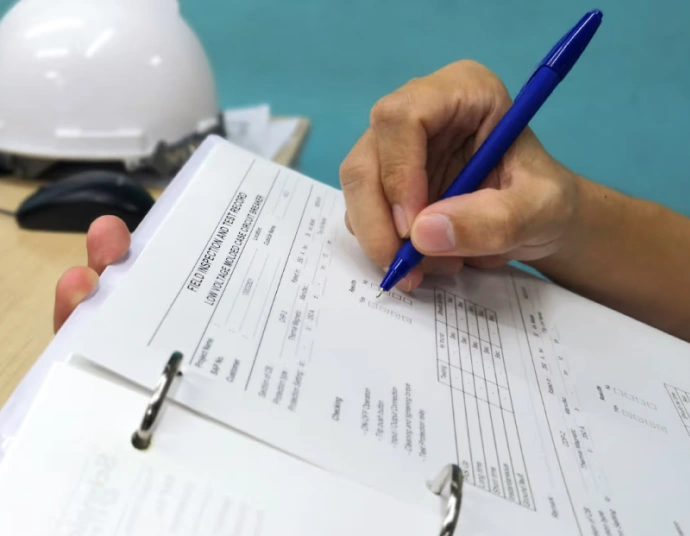
We translate with the published vocabulary of ISO 9001:2015, so terms like nonconformity and documented information mean exactly what the auditor expects.
A locked termbase keeps the manual, procedures, and records aligned across sites in Mexico, Germany, or wherever your next certificate hangs.
Automotive and aerospace supply chains often require documentation in English. We move quality systems into and out of English without losing clause traceability.
Your Quality Manual Meets the Auditor Before You Do
Certification bodies front-load their work. Before anyone sets foot in your plant, a stage 1 review examines your documented system: scope, quality policy, process map, and the manual or equivalent top-level document that ties them together. If the auditor cannot read that document, or reads a translation that mangles the standard's vocabulary, you start the audit cycle with a finding you did not need. Quality manual translation exists to prevent exactly that opening move from going wrong.
ISO 9001:2015 no longer mandates a quality manual by name, yet most certified organizations keep one because auditors, customers, and new hires all navigate the system through it. When that system must exist in two languages, the manual is where inconsistency shows first. A Spanish manual that calls corrective action by one name while the Spanish procedures call it another tells the auditor something uncomfortable: this company's documentation is not under control in its second language.
Techniwords has spent 15 years translating quality management documentation for manufacturers, always through an ISO 17100-compliant process with independent revision. We know what a stage 1 desk review looks for, and we deliver manuals that pass it without linguistic footnotes.
ISO 9001:2015 Speaks Its Own Language, and Auditors Notice Substitutes
The 2015 revision restructured the standard around the harmonized high-level structure, ten clauses running from context of the organization through improvement. That structure brought a controlled vocabulary with it, defined in ISO 9000:2015, and the definitions are not decorative. "Nonconformity" is not "defect." "Documented information" replaced both "documents" and "records," deliberately. "Risk-based thinking" is a term of art, not a slogan. Auditors trained on the standard listen for these words and read for them.
Here is how the clause structure maps to the translation issues we watch for:
| Clause | Theme | Translation risk |
|---|---|---|
| 4 | Context of the organization | Interested parties rendered loosely as stakeholders or clients |
| 5 | Leadership | Quality policy losing its committal verb forms |
| 6 | Planning | Risks and opportunities collapsed into a single vague noun |
| 7 | Support | Competence confused with training or qualification |
| 8 | Operation | Externally provided processes mistranslated as outsourcing only |
| 9 | Performance evaluation | Audit findings vocabulary drifting from the certification body's own |
| 10 | Improvement | Corrective action blurred with correction, two distinct concepts |
National standards bodies publish official translations of ISO 9001, and we anchor our terminology to them. Where a client's legacy documents use older vocabulary, we flag the conflict instead of silently mixing eras. Our team also handles translating the standards themselves when clients need internal working copies of normative references.
IATF 16949 and AS9100: When the Customer Dictates the Language
Sector schemes raise the stakes. In automotive, IATF 16949 audits ripple down through customer-specific requirements, and the large OEMs commonly expect supplier documentation to be auditable in English regardless of where the plant sits. A tier 2 supplier in Querétaro or Puebla whose quality manual exists only in Spanish faces a practical problem the day a customer auditor from Michigan arrives. The reverse happens too: a US supplier joining a German OEM's panel discovers that the plant-level documents its new customer references live in German. Our clients in automotive translation projects usually need both directions handled by the same team, against one termbase.
Aerospace is stricter still. AS9100 sits on top of ISO 9001 with additions on counterfeit parts, product safety, and configuration management, and prime contractors flow requirements down in English through portals like OASIS, where certification data is published. The aerospace suppliers we support often translate their manuals into English less for the certification body than for the primes' supplier development engineers, who audit against the English text of the standard and expect the manual to track its clause numbering exactly. We preserve that clause mapping in translation, so clause 8.4.3 in your manual answers clause 8.4.3 in the standard, in any language.
Deploying Your QMS in a Subsidiary or a Newly Acquired Plant
The most common trigger for a manual translation project is corporate geography changing faster than documentation. A company opens a plant in Monterrey, buys a competitor in Ontario, or moves assembly to a maquiladora, and suddenly the certified system must function in a language it was never written in.
One project from our files: a US aerospace machining group acquired a plant in Chihuahua and needed the corporate quality manual plus 38 tier-2 procedures in Spanish before the transfer audit six months later. We translated the manual first, locked its terminology with the plant's quality manager, then rolled the procedures through the same termbase in four batches. The transfer audit closed with zero documentation findings. The plant kept its bilingual system alive afterward by sending us each revised document as it changed, which costs a fraction of periodic full retranslations.
Deployment projects also surface the quality policy problem. The policy is the one piece of the manual that ends up laminated on the wall, quoted in onboarding, and recited, sometimes badly, during audits when an auditor asks an operator what it means. It has to be translated once, well, and identically everywhere it appears. Our Spanish technical translation team treats the policy as a fixed text: approved once by your leadership, then reused verbatim in every document that cites it.
Stage 1 happens at a desk, not in your plant. Certification bodies typically review your documented system before the on-site stage 2 audit. A manual the auditor cannot read, or reads in a translation that contradicts your procedures, can generate findings before anyone has seen a single machine run.
Beyond the Manual: The Rest of the Pyramid Has to Match
A translated manual sitting on top of untranslated procedures is a facade, and auditors treat it as one. The manual claims "we control nonconforming outputs per procedure QP-83," so the auditor asks for QP-83 and for the records it generates. If those exist only in the other language, the trail goes cold in front of a witness.
Most manual projects therefore grow into system projects, and we scope them that way from the start. The tier beneath the manual is procedure territory, where our SOP translation services carry the manual's terminology down into operational detail. Regulated clients add their qualification documents, and we align those too; the team that handles IQ, OQ, and PQ protocols works from the same client termbase. Internal audit programs generate their own paper, and when findings from a German or Chinese supplier audit need to reach corporate, our audit report translation service closes that loop. The full range of document types we cover is listed here.
Sequencing matters. Translate the manual first, freeze its glossary, then cascade. Teams that translate bottom-up, procedures first, invariably discover that fifty documents have already committed to terminology the manual later contradicts.
QMS Documentation Translation Is a Terminology Project Wearing a Deadline
A midsize manufacturer's quality system holds somewhere between 20,000 and 200,000 words across manual, procedures, work instructions, and forms. Perhaps 400 of those words do all the structural work: the defined terms, role titles, document type names, and process names that recur everywhere. Get those 400 right and consistent, and the rest of the QMS documentation translation is craftsmanship. Get them wrong and no amount of elegant prose saves the system.
Our method reflects that arithmetic. Week one of any QMS project is terminology: we extract candidate terms from the corpus, propose equivalents anchored in the official standard translations, and review them in a working session with your quality lead. The approved termbase then rides along in our translation environment, flagging every deviation before a file reaches the independent reviser. As an ATA corporate member and GALA member agency, we assign revisers who hold the linguists to the termbase, not to their personal preferences.
The termbase outlives the project. When your manual hits its next revision, or a customer audit demands a new procedure in ninety days, the vocabulary is already settled and the update costs days, not weeks.
How a Certification Audit Actually Runs in Two Languages
Bilingual audits have a rhythm worth understanding before you schedule one. The audit team reads documents in one language, interviews people in another, and reconciles the two in their findings. Certification bodies will provide interpreters or bilingual auditors, but they audit the documents as written. If your Spanish work instruction diverges from your English manual, an interpreter cannot paper over it; the divergence becomes objective evidence.
Preparation, then, is document alignment. Before an audit we recommend a targeted check: pull the ten documents the auditor is most likely to sample, quality policy, management review procedure, internal audit procedure, corrective action procedure, control of documented information, and verify the language pairs against each other. We offer this as a standalone review service, performed by a reviser who was not involved in the original translation, and it has caught drift that would have become findings: an obsolete revision still circulating in one language, a corrective action form whose fields no longer matched its parent procedure.
Companies based anywhere in the US can run this remotely with us; being headquartered in Texas, we also work on Central time for same-day exchanges with plants in Mexico.
What We Verify Before a Manual Leaves Our Hands
Every quality manual passes a structured check after independent revision and before delivery. The reviser works through a fixed list built from a decade and a half of audit-driven projects:
- Clause numbering and cross-references match the source exactly, including references to the standard's own clauses.
- Every defined term appears in its termbase form, with zero synonyms introduced during translation.
- Document codes, form numbers, and procedure IDs are untouched, since these are identifiers, not text.
- The quality policy text is identical everywhere it is quoted, in the manual, appendices, and any excerpt slides.
- Process maps, org charts, and turtle diagrams have every label translated, because auditors read the pictures first.
- Revision tables carry the source revision identifier, so document control can pair the versions on arrival.
Findings from this check go back to the linguists before you ever see the file. It is slower than shipping on first pass. It is also why our manuals survive desk reviews.
Scope, Cost, and Timing for a Manual Project
A standalone quality manual runs 8,000–25,000 words depending on how much procedure content has migrated into it. Translation with independent revision takes one to three weeks at that size. Full QMS projects are quoted from the actual corpus after repetition analysis, because quality documentation repeats heavily and you should not pay full rate for the same approval block three hundred times.
To scope a project, send the manual in its native format with a list of the documents beneath it, even if you only translate the manual now. Seeing the pyramid lets us build the glossary so the future tiers inherit it cleanly. The itemized quote arrives within one business hour.
Quality Manual Translation: What Quality Managers Ask Us
Can you translate our quality manual so a foreign subsidiary can get certified?
Yes, that is the most common project we see. We translate the corporate manual into the subsidiary's language using the official published terminology of ISO 9001:2015 in that language, then align the local procedures against it. Certification bodies audit the local-language documents directly, so the translation must stand on its own under a stage 1 desk review. Ours do, and we support the subsidiary through subsequent surveillance cycles by translating each revised document as it changes.
Do you use the official ISO terminology in other languages?
We anchor every QMS project to the official translations of ISO 9001 and ISO 9000 published by national standards bodies, such as the Spanish version issued through the ISO translation management group. Where your legacy documents use different terms, we flag the conflict and resolve it with your quality lead rather than mixing vocabularies. The agreed choices go into a client termbase that is enforced on every file, so the manual, procedures, and forms all use one consistent lexicon.
What happens during customer audits if our documentation is bilingual?
Customer auditors sample documents in whichever language version the site uses at the point of work, then trace upward to the manual. Their findings cite divergences between versions as document control failures, not translation nuances. We prevent that by translating both directions from a single termbase and by offering a pre-audit alignment check on the documents most likely to be sampled, performed by a reviser independent of the original translation. Several automotive clients schedule this check annually before customer audit season.
Can you handle a complete QMS, not just the manual?
Yes. A full system typically spans the manual, 30 to 100 procedures, work instructions, and forms, somewhere between 20,000 and 200,000 words. We phase the work: manual first to lock terminology, then procedures in prioritized batches, then floor-level documents. Repetition analysis keeps the cost well below a naive per-word total, because quality systems reuse approval blocks, headers, and standard clauses constantly. You receive a delivery schedule aligned with your audit calendar.
How do you handle updates when we revise the manual?
Send the revised source and we compare it against the stored translation memory of the previous version. Only changed segments are retranslated, the termbase guarantees the new text matches the old vocabulary, and you receive the updated target plus a summary of what moved. A typical annual manual revision costs a small fraction of the original translation. The same mechanism keeps procedure libraries current, which is how our longest-running QMS clients have stayed aligned across languages for years.
What does a quality manual translation cost and how long does it take?
A manual of 8,000–25,000 words takes one to three weeks including independent revision, priced per source word by language pair. The quote is itemized: translation, revision, terminology work, and any formatting of diagrams or process maps are listed separately so you can see where the money goes. Send the native file and the list of documents beneath the manual, and we return exact numbers within one business hour.