Mid-Atlantic
Technical Translation Services in Philadelphia
Specialist translators for the cell and gene therapy labs, pharmaceutical plants, and construction programs of the Delaware Valley. Batch records, validation protocols, and equipment documentation, translated to survive an audit.
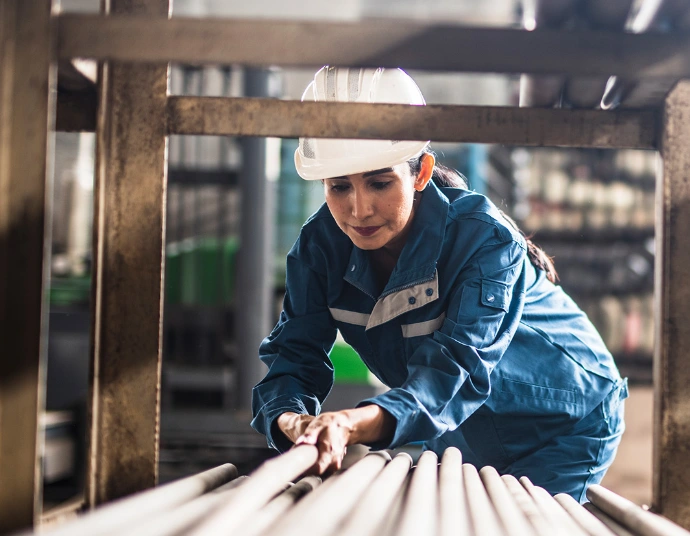
Batch records, cleaning validation, and CAPA files translated by linguists who work in pharmaceutical quality systems, then verified against the source by a second specialist.
Translators who already know what a lentiviral vector and a Certificate of Analysis are, matched to the CGT documentation coming out of University City and the Navy Yard.
Quotes within one business hour and delivery planned around audit dates, tech transfer milestones, and SEPTA project schedules, all on Philadelphia time.
Technical translation for the capital of cell and gene therapy
Philadelphia earned its "Cellicon Valley" nickname the hard way. The CAR-T therapies that reshaped oncology came out of Carl June's lab at the University of Pennsylvania. Spark Therapeutics, born from gene therapy research at Children's Hospital of Philadelphia and later acquired by Roche, developed Luxturna a few blocks from the Schuylkill and is building its gene therapy innovation center on Drexel's campus in University City. Around these anchors, a generation of spinouts and scale-ups has filled the labs of uCity Square and the Curtis Building, and CHOP's research enterprise keeps feeding the pipeline.
Techniwords provides technical translation services in Philadelphia for this ecosystem and the industries around it. Cell and gene therapy is a documentation-heavy business conducted across borders: vectors manufactured under contract in Europe, plasmids sourced from Asia, clinical sites recruited on three continents, and regulators in several languages. A therapy that exists in one language does not travel. Our job is to make the paperwork travel as reliably as the science.
The documents this sector generates are unforgiving. A mistranslated storage temperature on a cryopreservation protocol, a misplaced decimal in a dosing table, an ambiguous rendering of "shall be discarded": each is a deviation waiting to be written up. Our process pairs a specialist translator with an independent reviewer on every deliverable, following the ISO 17100 standard, so nothing reaches your quality unit on a single pair of eyes.
Biotech and lab equipment: the instruments behind the therapies
Every CGT suite in University City runs on imported instrumentation. Bioreactors and cell processing systems from German and Swiss manufacturers, incubators, centrifuges, and analytical instruments whose IQ/OQ/PQ documentation, firmware interfaces, and maintenance manuals arrive in the vendor's language. When a Philadelphia lab qualifies a new instrument, someone has to reconcile the German-language calibration certificate with the English validation master plan. That someone is frequently us.
Our biotechnology and lab equipment translation team covers the full instrument lifecycle: operating manuals, software strings on the instrument HMI, service bulletins, spare parts catalogs, and the decontamination certificates required before a service technician will touch a unit that has processed patient material. We also translate outbound: Philadelphia-based equipment and consumables makers exporting to European and Asian labs need their own documentation localized, including IFUs that must satisfy EU regulatory reviewers reading them in German or French.
Two document families dominate this work:
- Validation protocols and reports, where the translated text must map section-for-section onto the source so an auditor can follow both in parallel
- Standard operating procedures, where consistency of defined terms across dozens of related documents matters more than elegant prose
The Navy Yard: from battleships to biomanufacturing
The Philadelphia Navy Yard is one of the country's most successful industrial reconversions: 1,200 acres of former shipbuilding land at the foot of Broad Street, now home to more than 150 companies. GSK made the Navy Yard famous as a corporate campus during its decade at Five Crescent Drive, and the district's center of gravity has since shifted decisively toward the lab bench. WuXi Advanced Therapies operates cell and gene therapy testing and manufacturing there. Iovance Biotherapeutics built its Cell Therapy Center at the Navy Yard to manufacture TIL therapies at commercial scale. Adaptimmune and a cluster of smaller biologics operations fill in the blocks between them, alongside Urban Outfitters' headquarters in the old shipbuilding halls.
A contract manufacturing and testing hub like this is, by definition, multilingual. WuXi's parent organization spans Chinese and American operations, and technology transfer files, analytical method descriptions, and quality agreements move between English and Simplified Chinese continuously. European sponsors sending products to Navy Yard facilities for testing bring protocols and specifications drafted under EMA conventions. We translate these packages in both directions, keeping the bilingual terminology consistent from the first feasibility exchange to the final regulatory submission.
One Philadelphia project, concretely: a Delaware Valley biologics manufacturer preparing for a German partner's audit needed its deviation reports, environmental monitoring SOPs, and cleaning validation summaries, about 60,000 words, available in German in four weeks. We assigned two pharmaceutical translators sharing a live glossary, ran independent review in parallel rather than at the end, and delivered a week early. The audit closed with no documentation findings, which is the only metric that counted.
Pharmaceutical manufacturing across the Delaware Valley
Philadelphia sits at the center of one of the oldest pharmaceutical corridors in the country. Merck's West Point campus in Montgomery County remains one of the largest vaccine manufacturing sites in the world. Across the river, southern New Jersey hosts plants and R&D centers feeding the corridor that runs up through Princeton, and the wider Delaware Valley holds contract manufacturers, packaging operations, and cold-chain warehouses serving them. This is production territory, and production runs on documents.
Our pharmaceutical manufacturing translation practice serves this corridor with the document types quality managers actually send us: master batch records, process validation packages, annual product reviews, supplier audit reports, and the change control files generated when a line is upgraded with equipment from a foreign OEM. Vaccine and sterile injectable production adds its own layer: lyophilizer documentation, isolator and RABS manuals, and media fill protocols, much of it originating with German and Italian machine builders whose engineering staff write in their own language first.
Tech transfer is where translation deadlines get real. When a Delaware Valley site receives a process from a plant in Europe or ships one to a partner in Asia, hundreds of documents must switch languages without shifting meaning, on a schedule tied to regulatory commitments. We build the glossary at the start, staff certified specialist translators who have done tech transfers before, and hold terminology stable across every batch of files.
Construction and SEPTA: rebuilding the region's hard infrastructure
Philadelphia's construction economy has its own translation demands. SEPTA is modernizing a transit network that includes the country's largest surviving trolley system, with a multi-billion-dollar Trolley Modernization program to replace 1980s-era vehicles with accessible low-floor cars built by Alstom, and station reconstruction to match. The dramatic I-95 collapse and rebuild in 2023 reminded everyone how much heavy civil work runs through this region, and the pipeline of lab conversions in University City keeps commercial contractors busy turning office floors into cleanrooms.
For general contractors and trade firms, our construction translation team delivers the practical set: safety orientations and toolbox talks in Spanish for field crews, subcontract packages, equipment manuals for European formwork and hoisting systems, and the commissioning documentation that a cleanroom fit-out generates by the shelf-full. Lab construction sits at the intersection of our specialties, and it shows: the same translator who knows what an air changes per hour requirement means in a cleanroom spec also knows how it is phrased in a Spanish safety briefing.
German, Chinese, Spanish: why these three languages dominate here
Language demand in Philadelphia maps onto its industrial structure with unusual clarity.
German technical translation leads because the machinery does. Pharmaceutical filling lines, bioreactors, lyophilizers, and analytical instruments in Delaware Valley plants come disproportionately from German and Swiss builders, and their documentation, service communications, and audit correspondence follow. German is also the language of many sponsor and partner organizations auditing local sites.
Simplified Chinese follows from the CDMO economy. With WuXi Advanced Therapies operating at the Navy Yard and Chinese contract partners embedded throughout biopharma supply chains, quality agreements, analytical transfers, and manufacturing documentation move between English and Chinese weekly. Precision matters doubly here because both sides of the exchange operate under different regulatory vocabularies.
Spanish serves two distinct audiences: construction and warehouse workforces across the region who need safety and operational material in their first language, and Latin American regulators and customers for Philadelphia-made products, from vaccines to lab consumables, whose submissions and IFUs must read natively.
The documents Philadelphia sends us most
Every city has a documentary signature. Philadelphia's is quality-system paper: the records that prove a process did what it was supposed to do, written for readers whose job is to doubt them. The table below shows the request patterns we see most from Delaware Valley clients, with the pairing that usually drives them.
| Document type | Typical Philadelphia scenario | Most requested pairs |
|---|---|---|
| Batch records and deviation files | Partner audits and tech transfers at corridor manufacturing sites | English-German, English-Chinese |
| Validation protocols and reports | Instrument and process qualification in CGT and biologics suites | German-English, English-Chinese |
| SOP families | Harmonizing procedures across U.S. and overseas sites | English-Spanish, English-German |
| Equipment manuals and service records | European filling lines, bioreactors, and analytical instruments | German-English, Italian-English |
| Site safety and training materials | Lab fit-outs and heavy civil work across the region | English-Spanish |
The pattern behind the table is consistent: documents written to be audited, in pairs set by where the machines and the partners come from. Staffing follows the pattern, not the other way around.
Looking for a technical translator in Philadelphia?
A technical translator in Philadelphia is most often needed at a bad moment: an FDA or EMA inspection announced, a tech transfer slipping, a German auditor arriving in three weeks. What you need then is not a directory of freelancers but a team that can absorb 50,000 words of quality documentation without dropping terminology, and that has done it before.
Techniwords assigns each Philadelphia project a translator whose background matches the content: pharmacists and biochemists for CMC documentation, engineers for equipment manuals, construction-experienced linguists for site material. Every file then passes to a second, independent reviewer. After fifteen years of building this bench, we can match a lentiviral vector production SOP or a lyophilizer fault-code list to someone who has translated that exact document type before.
We are equally clear about what we are not. We are not a Philadelphia office you can visit; we serve the city from our Texas base on Eastern Time business hours, with encrypted file transfer and NDAs as the default for pharmaceutical work. No courier ever improved a batch record translation. Responsiveness and subject-matter depth did.
A technical translation company built for regulated industries
Choosing a technical translation company in Philadelphia usually means choosing a partner your quality system can defend. Auditors ask how translations are produced and verified. Our answer is documented: certified specialist translators, systematic independent review under an ISO 17100-compliant process, named linguists with recorded qualifications, and translation memories that keep a term translated the same way in 2026 as it was in 2024. As members of the American Translators Association and GALA, we operate inside the profession's standards rather than alongside them.
The same structure serves clients outside pharma. An engineering firm on a SEPTA package gets the same glossary discipline; a Navy Yard exporter gets the same review chain on its French IFUs. What changes is the specialist, never the process.
How a remote technical translation agency serves Philadelphia
Working with our technical translation agency from Philadelphia is deliberately simple. You upload files through encrypted transfer, flagging any that carry GMP or clinical confidentiality. Within one business hour you receive an itemized quote: word counts by file, language pairs, delivery date, and any formatting work listed separately. Your project manager, one person, reachable through your entire Eastern Time workday, coordinates translators, reviewer, and delivery.
For audit-driven deadlines we plan backward from the audit date, not forward from ours. For continuing clients we maintain your glossaries and translation memory at no charge, so the second tech transfer costs less than the first. And for anyone still comparing vendors, send a short sample set; the quality of the itemized quote alone tells you most of what you need to know.
From a University City vector suite to a Montgomery County vaccine line to a trolley platform on Girard Avenue, Philadelphia's technical economy writes in many languages. We make sure nothing is lost between them.
Technical translation in Philadelphia: frequent questions
Do you translate GMP documentation for FDA and EMA audits?
Yes, this is core work for our Philadelphia clients. We translate batch records, SOPs, deviation and CAPA files, validation packages, and audit responses between English and the languages of your partners and regulators, most often German, Chinese, and Spanish in the Delaware Valley. Every document is translated by a specialist with pharmaceutical quality experience and independently reviewed by a second linguist, and we can provide signed certificates of accuracy plus translator qualifications for your audit trail.
Can you handle cell and gene therapy terminology?
Yes. Our life-science bench includes translators who work daily with CGT documentation: vector production records, cryopreservation protocols, chain-of-identity and chain-of-custody procedures, apheresis instructions, and analytical methods for identity and potency. For Philadelphia clients in University City and at the Navy Yard we maintain bilingual glossaries of CGT terms per project, so "drug product" and "final formulated product" never blur across a document set that regulators will read line by line.
How do you keep terminology consistent across a tech transfer?
We build a bilingual glossary during the first file batch and require every translator and reviewer on the project to work from it, inside a shared translation memory. Defined terms, equipment names, and process step labels are locked once approved, and your subject-matter experts can review the glossary before full production starts. On multi-month transfers this is the difference between a coherent document set and one where three translators chose three different words for the same valve.
Do you translate construction safety materials into Spanish for Philadelphia sites?
Yes. For contractors across the region, including lab fit-outs in University City and heavy civil work, we translate site orientations, toolbox talks, fall protection and scaffold procedures, and incident forms into field-ready Spanish. The translators we assign have construction experience, so the vocabulary matches what crews actually say on site rather than dictionary equivalents. Materials are delivered print-ready, and recurring safety programs are discounted through translation memory reuse.
Do you have an office in Philadelphia?
No. We serve Philadelphia from our Texas base, working Eastern Time business hours, and we prefer to say that plainly rather than rent a Center City address for appearances. Files move through encrypted transfer, NDAs are standard for pharmaceutical and bid-sensitive work, and your project manager answers during your workday. Quotes arrive within one business hour, which in practice is faster contact than most local vendors offer.
What does technical translation cost for Philadelphia companies?
Pricing is per source word by language pair and subject. Spanish safety materials sit at the lower end; German validation packages and Chinese analytical transfers price higher because the specialist pool is smaller. Formatting, certificates of accuracy, and rush surcharges are itemized separately so nothing is hidden in a blended rate. Repeated content, common in SOP families and recurring reports, is discounted through translation memory, which materially lowers cost over a multi-year quality relationship.
Start your Philadelphia translation project
Send your batch records, validation protocols, or site documentation through our encrypted transfer and receive an itemized quote within one business hour. Specialist translators, independent review, and deadlines planned around your audits.
Get a Free Quote