Texas Innovation Hub
Technical Translation Services in Austin, TX
Techniwords translates the process documentation, engineering specifications, and software content that Austin's manufacturing and technology economy runs on, from Samsung's semiconductor fabs in Austin and Taylor to Tesla's Gigafactory on the eastern edge of the city. We are a Texas-based technical translation company, fifteen years in business, serving Austin's Korean, Spanish, and Chinese language documentation needs with certified translators and an ISO 17100-compliant review process.
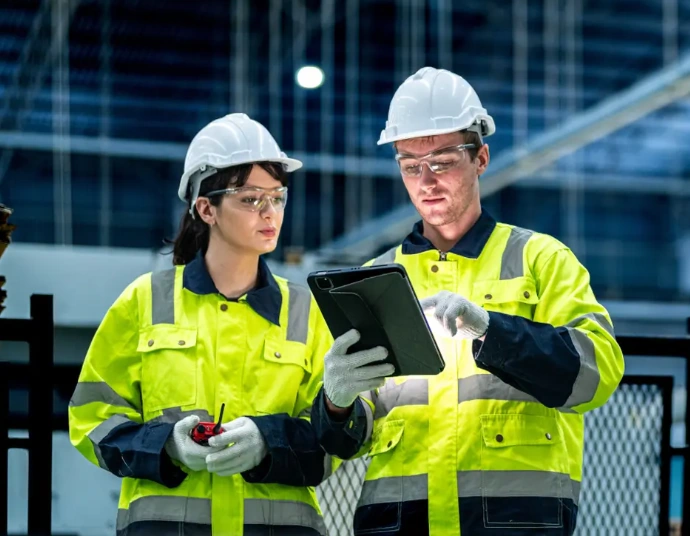
Dedicated Korean translation teams for Samsung Austin Semiconductor fab documentation, the Taylor fab program, and the Korean supply chain supporting Tesla Gigafactory Texas.
UI strings, API documentation, embedded firmware guides, and enterprise hardware manuals for Austin's software-heavy technology economy, handled by translators who read code context.
We are headquartered in Texas, operate on Central Time, and serve Austin clients as neighbors with no time zone gap, same-day turnaround on quotes, and project managers who work your hours.
Giga Texas: When Electric Vehicle Manufacturing Made Korean Translation Essential in Austin
Tesla's Gigafactory Texas, known as Giga Austin, sits on 2,100 acres at the eastern edge of the city, and it changed the translation demand of the Austin market in ways that were not immediately obvious when the facility opened in 2022. The factory produces Model Y and Cybertruck vehicles at scale. What made Korean translation a daily operational requirement is the supply chain: Samsung Semiconductor's advanced process nodes supply the chips that power Tesla's vehicle electronics, and many of the precision manufacturing suppliers, toolmakers, and process equipment vendors in the Gigafactory supply chain trace directly or indirectly to Korean-headquartered companies.
The practical result is a stream of Korean-to-English technical documentation flowing into the Giga Austin operation: equipment manuals from Korean machine builders, supplier quality specifications, incoming inspection criteria, process control documentation, and engineering change notifications from Korean component manufacturers. These documents need translation that is accurate at the technical level, which means the measurement values, material specifications, and process parameters carry over exactly rather than approximately. Our automotive translation practice covers manufacturing documentation for both vehicle assembly and the advanced electronics that modern EVs require.
On the English-to-Korean side, Austin engineers send corrective action requests, engineering change orders, supplier audit findings, PPAP-style part approval submissions, and production feedback back to Korean headquarters and suppliers. This direction requires Korean that maps onto the supplier's internal technical vocabulary rather than inventing new terms for concepts the supplier already has precise words for. When we build a termbase for a Tesla supply chain program, we harvest terminology from the client's existing bilingual correspondence and quality records first, so that new documents land in the supplier's established vocabulary rather than introducing translation artifacts that create confusion on the factory floor in Korea.
Samsung Austin Semiconductor and the Taylor Fab Program
Samsung Austin Semiconductor has operated a fabrication facility on Parmer Lane in north Austin since 1996, making it one of the oldest continuously operating advanced logic fabs in Texas. The Austin fab produces chips at mature and advanced process nodes and serves as a key node in Samsung's global manufacturing network. In 2021, Samsung announced a major new fab in Taylor, Texas, approximately 25 miles northeast of Austin, targeting advanced process nodes and representing one of the largest single semiconductor investments in US history.
For both programs, the documentation flow between Samsung's Korean headquarters in Suwon and its Texas operations is constant. Process specifications, equipment qualification records, quality management standards, training materials, and engineering change documentation all move between Korean and English. Samsung operates with Korean as its internal engineering language at headquarters level, which means Texas facilities receive process documentation, equipment manuals from Korean vendors, and quality standards that originate in Korean and must be translated for American technicians, quality engineers, and process engineers working in Austin and Taylor.
Our electronics and semiconductor translation team has worked on Samsung program documentation before. The vocabulary in Samsung's process libraries is specific: terminology for Samsung-proprietary process steps, equipment model designations, and quality system categories follows Samsung's own internal conventions, which differ from the generic semiconductor terminology in industry standards. We build client termbases that capture this proprietary vocabulary from existing bilingual Samsung documents, so that subsequent translations match the language Samsung engineers in Korea actually use rather than technically correct but unfamiliar alternatives.
Samsung Austin Semiconductor's Parmer Lane facility and the new Taylor fab together represent one of the largest Korean-headquartered semiconductor footprints in the United States. The documentation infrastructure supporting those facilities requires Korean technical translation as an operational capability, not an occasional service.
For the Taylor fab, the documentation challenge is even larger during the ramp-up phase. New equipment is being installed, qualified, and integrated with Samsung's process control systems, and every piece of new equipment from a Korean vendor arrives with documentation that technicians need in English before they can certify the installation. We support ramp-up programs with dedicated translator capacity reserved for the client, staged delivery schedules aligned to equipment installation milestones, and terminology management that keeps new equipment integrated into the existing termbase rather than creating translation islands. A recent Taylor-area project is typical of the phase: a Korean equipment vendor's qualification package, 38 documents spanning installation qualification protocols, operational qualification test records, and preventive maintenance schedules, needed in English before a tool sign-off gate. We delivered the IQ protocols first so the site team could start witness testing, then the OQ records and PM schedules in two further stages, each pass revised independently and checked against the program termbase so a chamber component carried the same English name in document 3 and document 37.
Dell Round Rock, Oracle, and Austin's Software Technology Economy
Dell Technologies is headquartered in Round Rock, north of Austin, and the company's documentation library spans enterprise servers, storage systems, networking equipment, and a broad range of software and services. Dell's global customer base and international supply chain generate constant demand for technical documentation in Spanish, French, German, Portuguese, Japanese, Chinese, and other languages. Enterprise hardware documentation for Dell products must be technically precise: installation procedures, rack mounting guides, firmware update instructions, and BIOS configuration references have an international audience of IT professionals who will follow them literally.
Oracle, which relocated its headquarters to Austin, and the broader software ecosystem that has made Austin a major US technology hub, creates demand for a different class of technical translation: software documentation. User interface strings, API reference documentation, administrator guides, release notes, and in-application help content all require localization that handles the structural differences between software translation and document translation. A UI string translated for Korean cannot simply be the Korean equivalent of the English; it must fit the character budget, use the appropriate honorific register for a business application, and handle placeholder variables correctly. Our software and IT translation practice manages these constraints as part of the standard workflow.
The Austin software ecosystem also includes Indeed's headquarters downtown, Bazaarvoice, the large Austin engineering offices of companies headquartered elsewhere, and a deep population of mid-stage software companies that are beginning to localize for international markets. For companies at this stage, the translation need often starts with a single language and expands. We build translation memories and termbases from the first project so that as a software company grows its international presence, each new language pair benefits from the terminology discipline established on the first.
Korean Is the Pivot Language of Austin's Manufacturing Sector
Among the languages Austin's technical industries need, Korean stands out for the depth of its connection to the manufacturing base. Samsung is the most prominent anchor, but Korean-headquartered companies appear throughout the Austin supply chain: equipment vendors, materials suppliers, component manufacturers, and process technology providers. When both Samsung and Tesla rely heavily on Korean-origin technology and suppliers, a Korean translation need that might have seemed like a niche in an earlier era becomes a daily operational reality for Austin-area plants and their procurement and engineering teams.
What makes Korean technical translation demanding is not primarily the language itself but the combination of technical depth and vocabulary precision it requires. Korean technical writing in semiconductor and manufacturing contexts uses a large number of industry-specific terms, many derived from Japanese or English with Korean phonological adaptation, and the right choice among near-synonyms often matters for engineering accuracy. A Korean process engineer writing about etch uniformity or deposition selectivity uses terms that have exact English equivalents in semiconductor vocabulary, and our translators know those equivalents rather than approximating them.
For Austin engineering teams receiving Korean documentation from suppliers, the experience should be that the translation reads as though it were originally written in English by someone who knows the process. That standard requires translators who have subject-matter familiarity alongside linguistic fluency. Our Korean team includes translators with electrical engineering backgrounds, materials science training, and years of experience working exclusively on electronics and manufacturing documentation. All work goes through an independent second reviewer before delivery, following the ISO 17100 process, and we document the review in our quality records so your incoming inspection has the paper trail it needs.
| Language | Austin driver | Common document types |
|---|---|---|
| Korean | Samsung Austin/Taylor, Tesla supply chain, Korean equipment vendors | Process specs, equipment manuals, PPAP packages, supplier quality records |
| Spanish | Manufacturing workforce, OSHA compliance, Latin American technology markets | Safety training, work instructions, SDS libraries, product documentation |
| Chinese Simplified | Semiconductor supply chain, electronics component suppliers in mainland China | Component datasheets, supplier quality files, incoming inspection criteria |
Chinese Simplified in Austin's Semiconductor Supply Chain
While Korean is the dominant Asian language in Austin's manufacturing sector, Chinese Simplified plays a consistent role in the semiconductor supply chain. Mainland Chinese companies supply silicon wafers, process chemicals, packaging materials, test equipment, and sub-components to semiconductor fabs across Texas. Samsung and other Austin-area fabs source from mainland Chinese vendors whose documentation arrives in zh-CN, the Simplified Chinese standard used in China. For incoming inspection, supplier qualification, and engineering change management, these documents need English translation that is technically accurate enough to drive production decisions.
Our Chinese Simplified technical translation service covers semiconductor-specific vocabulary in the mainland Chinese context. This includes the Chinese technical nomenclature for specific process chemicals, the quality management terminology that mainland Chinese suppliers use in their IATF and ISO documentation, and the measurement and specification formats that Chinese component manufacturers follow. The distinction between zh-CN and zh-TW matters here: a translator qualified for Traditional Chinese work with TSMC is not automatically the right choice for documentation from a Shenzhen component supplier.
For software documentation, Chinese Simplified is often the first localization language Austin software companies need when entering Asian markets, because mainland China represents the largest addressable market. Software localization for zh-CN involves more than translation: character encoding, locale settings, date format adaptation, and user interface text layout for a double-byte character set all require coordination between the translation team and the development team. We handle these engineering-adjacent tasks as part of the localization workflow.
Spanish in Austin's Manufacturing Operations and Regional Market
Austin's manufacturing sector, including the Gigafactory and Samsung's facilities, employs a workforce that includes a substantial Spanish-speaking population, reflecting Central Texas demographics. OSHA's Hazard Communication Standard requires that employers provide chemical hazard information in a language employees understand, and for Austin and Taylor manufacturing sites, that means Spanish safety documentation is not optional but regulatory. We translate lockout/tagout procedures, confined space entry programs, emergency response plans, and new-employee orientation materials with the register appropriate for workers rather than engineers.
Beyond workplace safety, Austin software and technology companies targeting Spanish-speaking markets in the United States, Mexico, and Latin America generate product documentation translation needs that require careful attention to regional variant. A product guide for a US Hispanic audience reads differently from the same document targeting Mexican professional users or South American enterprise buyers. We match Spanish documentation to the right variant and register for the intended audience, and we maintain regional termbases so that a consistent product vocabulary follows the company across markets.
For Spanish technical translation of manufacturing documentation specifically, the quality of the result depends heavily on who reviews it. A Spanish speaker can confirm fluency; only a technically qualified reviewer can confirm that a maintenance procedure in Spanish tells a technician to do the right thing in the right order. Our review process requires that the reviser assigned to a technical document has subject-matter qualifications in addition to native language status.
A Technical Translator in Austin: From Fab Process Specs to API Documentation
The range of technical translation needs in Austin is wider than most US cities because the economy spans both advanced manufacturing and software technology. A technical translator in Austin might work on Samsung process specifications in the morning and Oracle API documentation in the afternoon, which sounds like variety but is actually a problematic signal. Specialized technical translation requires depth, and a translator who ranges across domains this wide is making guesses in at least one of them. We do not assign documents based on availability. We assign them based on demonstrated subject-matter competence in the relevant field.
For semiconductor documentation, our Austin-assigned translators come from electronics and materials science backgrounds and work exclusively in that domain. For software and IT documentation, our team consists of translators with computer science or software engineering backgrounds who have spent their careers in technology documentation. The two pools do not overlap, and that separation is intentional. The terminology of a MOSFET fabrication process and the terminology of a REST API have nothing in common, and pretending otherwise costs clients correction cycles.
Behind every translator stands an independent reviser. This is not a proofreading step; it is a full bilingual review where a second specialist reads the translation against the source sentence by sentence and checks for technical accuracy, terminology consistency, and conformance with the client's glossary. For ATA-certified translators working in a specialty field, the independent review still catches things: a value that converted correctly but used the wrong notation convention, a safety warning that translated accurately but lost the grammatical emphasis that makes it unambiguous. The review step is part of every project, not an upsell, and it is why an independently verified Techniwords translation passes your incoming quality inspection without correction cycles.
If you want to understand how we qualify translators for your specific documentation type, our page on what a technical translator does describes the screening, domain testing, and ongoing qualification process that keeps our project teams calibrated to actual industry practice.
A Technical Translation Agency Built for Austin's Mix
Techniwords is a technical translation company that has served US manufacturers and technology firms for fifteen years. We are members of the American Translators Association and the Globalization and Localization Association (GALA), and our process follows ISO 17100. For Austin clients, that means your translation program is backed by the same quality infrastructure that supports semiconductor programs in Phoenix, automotive programs in San Antonio, and aerospace programs in Seattle, all from the same Texas base with the same termbase technology and the same review discipline.
Because we are headquartered in Texas, Austin clients receive project management on Central Time with no lag between your business hours and ours. Quotes are itemized and delivered within one business hour. For Samsung-adjacent programs we have experience working inside document management portals and strict confidentiality protocols, and every translator and reviser works under signed NDA before seeing a single file. For software companies new to localization, we can structure a pilot project across two or three languages to establish terminology and workflow before scaling to a full localization program.
To see how the same team serves neighboring Texas markets, our San Antonio technical translation page covers Toyota Texas, Joint Base San Antonio, and the Japanese and Spanish documentation that drives translation work there. All of Texas is served from one team with one shared termbase infrastructure, so a manufacturer with operations in both cities runs on consistent vocabulary rather than two separate vendor relationships. You can also see our full locations listing for every US metro we cover with the same service model.
Austin Translation Questions, Answered
Do you translate Korean for Samsung Austin Semiconductor and the Taylor fab programs?
Yes, and it is one of our most active Austin language pairs. We translate process specifications, equipment qualification records, quality management documentation, training materials, and engineering change orders between Korean and English for Samsung-adjacent programs. Our Korean technical translation team has semiconductor process backgrounds and works from client-specific termbases built from existing Samsung program vocabulary. For Taylor fab ramp-up documentation with tight installation schedules, we reserve dedicated capacity and deliver in stages aligned to your equipment milestones.
Can you handle Gigafactory documentation for Tesla Texas manufacturing?
Yes. Tesla Gigafactory Texas generates both internal manufacturing documentation and supplier quality documentation, much of it connected to Korean and Chinese-origin suppliers. We translate supplier process specifications, incoming inspection criteria, equipment manuals, and corrective action correspondence for Giga Austin-adjacent programs. For EV manufacturing specifically, battery documentation, powertrain specifications, and high-voltage safety procedures require translators with automotive and electrical engineering backgrounds, which our team has.
Do you translate software documentation and UI strings for Austin tech companies?
Yes, and software localization is one of our established service lines. We handle UI strings, API reference documentation, administrator and user guides, in-application help content, and release notes for Korean, Spanish, Chinese Simplified, French, and more than sixty other language pairs. Our software translators have computer science or software engineering backgrounds and handle placeholder variables, character encoding requirements, and locale-specific formatting as part of the standard workflow, not as add-ons.
How does Chinese Simplified fit into Austin's semiconductor documentation needs?
Mainland Chinese companies supply components, chemicals, and equipment to Austin-area semiconductor fabs, and their documentation arrives in Simplified Chinese. For incoming inspection, supplier qualification, and quality management, these documents need English translation accurate enough to drive production decisions. We maintain a separate Simplified Chinese team from our Traditional Chinese team, with translators familiar with mainland Chinese technical conventions and quality management vocabulary. The two variants use different character sets and, in technical fields, sometimes different terminology, so we match the translation to the document's actual origin.
What Spanish translation services do Austin manufacturers need most?
The most frequent requests from Austin manufacturing sites are OSHA-required safety documentation: hazard communication training, lockout/tagout procedures, confined space entry programs, and emergency response plans. These must be translated accurately enough that a Spanish-speaking worker can follow the procedure safely, which means the register has to be accessible rather than technical, and the reviewer has to have both subject-matter and language qualifications. We also translate production work instructions, quality inspection criteria, and new-employee orientation materials for manufacturing workforce populations in Central Texas.
Does Techniwords serve Austin from its Texas headquarters, and what does that mean for turnaround?
Yes, we are Texas-based and Central Time. Austin clients get project managers in the same time zone, quotes within one business hour during business days, and delivery dates that account for your Austin-specific milestones rather than being calculated abstractly. There is no remote time zone coordination required. Standard project turnaround for Korean semiconductor documentation runs four to six business days for 10,000 words including independent review. Rush service is available for urgent milestones. We are happy to set up a standing arrangement for ongoing Samsung or Gigafactory supply chain documentation with reserved capacity.
Put a Texas Specialist on Your Austin Documentation
Send us your Samsung supplier records, your Gigafactory equipment manual, or your software localization package. You will have an itemized quote within one business hour from a Texas-based team that already knows your industries' vocabulary, whether that is Korean semiconductor documentation or Spanish safety training for your manufacturing floor.
Get a Free Quote