Mechanical engineering
Mechanical Engineering Translation Services
Techniwords provides mechanical engineering translation services for manufacturers, machine builders, and pressure equipment fabricators moving documentation between the US and the rest of the world. GD&T callouts, ASME BPVC references, fits and tolerances, and machine safety files arrive intact on the other side of the language barrier.
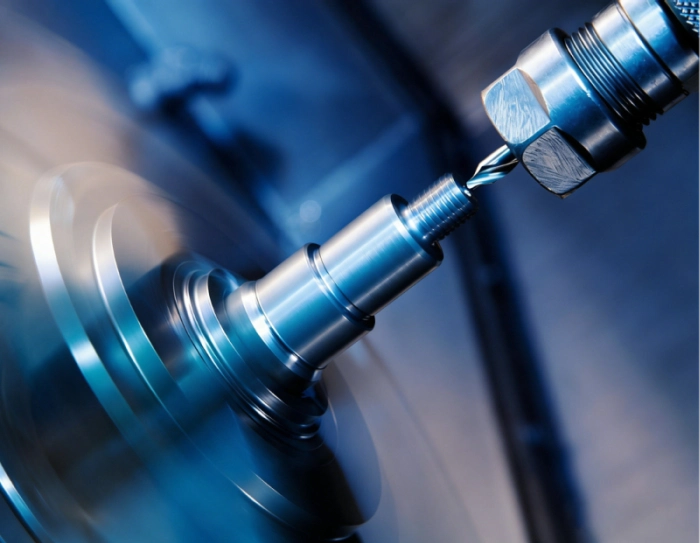
Datum references, position tolerances, and surface finish symbols per ASME Y14.5 stay exactly where the designer put them, in every language we deliver.
BPVC section references, weld procedure vocabulary, and NDE terminology handled by linguists who know what a U stamp commits a fabricator to.
European machinery files adapted for US plants, and US equipment documentation prepared for CE-marked export, with the regulatory gap handled explicitly.
Mechanical engineering documentation crosses oceans daily
A pressure vessel designed in Houston gets fabricated in Italy. A packaging line built near Stuttgart lands on a factory floor in Ohio. A Japanese machine tool arrives with a manual its Kentucky operators cannot read. Mechanical engineering has been a globally traded discipline for decades, and its paperwork carries obligations that survive shipping: code compliance, tolerance stacks, safety functions, warranty terms. When any of it changes language, the engineering content has to come through untouched.
That is the specific job of mechanical engineering translation services, and it is different from general technical translation. The translator must recognize that "Wellendichtring" is a rotary shaft seal and not a generic gasket, that "trattamento termico di distensione" is stress-relief heat treatment, and that an H7/g6 callout is not decoration but a running fit someone will machine to. Techniwords has served mechanical manufacturers for 15 years with translators trained in mechanical disciplines, an ISO 17100-compliant process, and independent revision on every file that leaves our hands.
ASME BPVC: when the code itself sets the vocabulary
The ASME Boiler and Pressure Vessel Code governs pressure equipment across the US market, and its language is contractual. Section VIII Division 1 rules vessel design and fabrication, Section IX qualifies welding procedures, Section V defines nondestructive examination, and Section II fixes material specifications. A fabricator holding a U stamp for vessels or an S stamp for power boilers commits to that exact framework, and the documentation trail, design calculations, WPS and PQR records, NDE reports, and Manufacturer's Data Reports, is what an Authorized Inspector audits.
Foreign fabricators pursuing or holding ASME stamps generate a steady flow of translation work: Italian and German shops need their weld procedures, quality manuals, and shop travelers rendered into English for joint reviews, while US owners buying code vessels abroad need mill certificates and fabrication records they can file with confidence. Our translators keep the code's own distinctions intact. "Examination," "inspection," and "testing" are three different activities in ASME usage with three different responsible parties, and a translation that swaps them muddies the audit trail. Material designations stay in their SA-516-70 form, never localized, and every paragraph reference such as UG-99 or UW-11(a) is preserved so the Authorized Inspector can trace each claim to its rule.
Drawings, GD&T, and the grammar of ASME Y14.5
Fabrication drawings are the densest documents we handle per square inch. Geometric dimensioning and tolerancing under ASME Y14.5 forms a compact symbolic language, and the notes surrounding it, flag notes, weld symbols per AWS A2.4, surface texture callouts, revision blocks, carry the instructions that symbols cannot. Translating a drawing means translating those notes while leaving the geometry, the dimensions, and the symbol grammar untouched, then verifying that nothing shifted a leader line or clipped a tolerance frame in the process.
We deliver engineering drawing translation in native formats, working in the DWG, DXF, or PDF layer the client supplies, with text extracted and reimported so title blocks, BOM tables, and notes remain editable. One structural point deserves emphasis for transatlantic work: ASME Y14.5 and the ISO GPS system (ISO 1101 and its family) are related but not interchangeable. Concepts like the envelope requirement apply by default under ASME and only by explicit callout under ISO. When a drawing crosses between systems, we translate the words and flag the standard mismatch to your engineering team, because deciding how to reconcile the two is an engineering call, not a linguistic one. That flag has saved clients from re-machining more than once.
European machines on American floors: two safety regimes, one manual
Machine builders in the EU document their equipment against the Machinery Directive 2006/42/EC, now transitioning to Machinery Regulation (EU) 2023/1230, supported by harmonized standards like EN ISO 12100 for risk assessment. The US has no equivalent single law. Instead, OSHA's general industry rules in 29 CFR 1910 Subpart O govern machine guarding, ANSI B11 standards define design practice, and OSHA 29 CFR 1910.147 controls hazardous energy during service. A European manual translated word-for-word into English is therefore accurate and still wrong for its audience, because it cites obligations and symbols a US plant does not use while omitting the lockout/tagout content OSHA expects.
| Documentation element | EU framework | US expectation |
|---|---|---|
| Risk assessment | EN ISO 12100, technical file | ANSI B11.0 risk assessment, plant safety review |
| Conformity statement | EC/EU Declaration of Conformity, CE mark | No CE equivalent; NRTL listing (UL, CSA) often required by AHJ |
| Energy isolation | EN ISO 14118 provisions in manual | Lockout/tagout procedures per 29 CFR 1910.147 |
| Electrical safety | EN 60204-1 | NFPA 79, NEC field wiring rules |
We translate the full documentation chain with those differences annotated: the operator's manual through our user manual translation services, the machinery risk assessments behind the CE file, and the EC Declaration of Conformity itself, covered on this page. For US builders exporting to Europe, the same team works in reverse, preparing English documentation for CE marking and pointing out where an ANSI-based manual needs content the EU regulation demands, such as noise emission declarations.
Inch and metric: fits, tolerances, and honest numbers
Mechanical engineering is the industry where unit handling can scrap real parts. European drawings tolerance shafts and bores through ISO 286 fit classes; American shops often dimension in decimal inches with explicit limit dimensions. The two systems express the same physics differently, and a translation project has to decide, with the client, what the target shop floor actually needs. Our default is strict: numbers are never converted unless instructed, and when conversion is requested we apply the client's rounding rules and dual-dimension the result so the original value remains authoritative.
A fit class is not a number. An H7/g6 designation on a 40 mm bore defines a clearance band of roughly 9 to 50 microns. Converting it to a single inch dimension without the limit values destroys the design intent, and re-deriving inch limits is engineering work, not translation. We render the callout faithfully, add the limit values where the client wants them, and never let a tolerance quietly change width in translation.
The same discipline applies to thread designations (M12 x 1.75 stays metric; it has no inch "equivalent"), to sheet metal gauges, and to torque tables, where a manual that mixes N·m and lb-ft without labeling each column has already caused field failures. Our numeric QA pass checks every value in the target against the source, line by line, before the reviser reads a word.
Special machines, integrators, and the documentation package
Custom machine builders and system integrators produce the most varied documentation in this sector: one project can bundle a functional specification, pneumatic and hydraulic schematics, PLC alarm lists, spare parts catalogs, and commissioning checklists. We handle the package as a unit so the terminology matches across all of it. The alarm text an operator sees on the HMI must use the same words as the troubleshooting chapter in the manual, or the manual is useless at 2 a.m. For component-level content, our teams also produce translated technical datasheets for the drives, gearboxes, and sensors that ship inside the machine, keeping supplier specifications aligned with the integrator's own documents. Robot cells and their specific safety documentation are covered in depth by our robotics and automation practice.
A recent project shows the pattern. An Italian builder of filling and capping machinery sold three lines to a beverage plant in Georgia. The documentation arrived as 1,100 pages of Italian manuals, schematics, and an EN ISO 12100 risk file. Over six weeks we delivered the English set with lockout/tagout-relevant sections annotated for the plant's EHS manager, an aligned Italian-English termbase covering 640 machine-specific terms, and HMI strings translated in a length-limited format the builder's controls engineer could load directly. The plant passed its insurer's machine safety review without a documentation finding.
German, Italian, and Japanese: the machine-building languages
Language demand in mechanical engineering follows the machine trade. Germany remains the largest European exporter of machinery to the US, and German documentation arrives dense, precise, and full of compound nouns that resist casual translation; our German technical translation team works on machine tools, packaging lines, and drive systems every week. Italy ships the packaging, food processing, and plastics machinery that fills American plants, and our Italian engineering linguists, described in our Italian service overview, are used to manuals written by the same small engineering office that built the machine. Japan sends machine tools, presses, and automation components whose documentation style differs structurally from Western manuals; learn more about how we handle Japanese sources, including the common case where an existing rough English version needs to be rebuilt from the Japanese original rather than patched.
As a member of ATA and GALA, we assign these projects only to translators with documented mechanical credentials, and every deliverable passes a second, independent reviser before it reaches you. That structure is not marketing; it is how a translated torque spec stays a torque spec.
Documentation that ages with the machine
A machine's paperwork does not stop moving after commissioning. Builders issue service bulletins when a component supplier changes, retrofit instructions when a drive family goes obsolete, and revised manuals when a safety function is upgraded. Each update has to reach every language the original documentation shipped in, and it has to reach them consistently: a German bulletin that modifies chapter 6 of the manual must land in the English manual's chapter 6 with the same part numbers and the same warnings, or the maintenance crew is working from two different machines on paper.
We manage these update streams through the translation memory built on the original project, which means a 40-page revised manual where only six pages actually changed is priced and scheduled on the six pages. The same mechanism covers the awkward legal cases: when a US plant modifies a European machine substantially enough to affect its safety functions, the documentation trail of that modification becomes evidence, and plants ask us to translate the change records both ways so the builder, the insurer, and the plant all read one consistent history. Old machines generate work too. We have rebuilt English documentation for a 1980s German gear hobber from scanned originals, because the plant still runs it and OSHA still expects an operator to have instructions he can read.
Glossaries: the compounding asset in mechanical translation
Mechanical vocabulary is deep, house-specific, and worth managing deliberately. Is your company's "Spindel" a spindle, a lead screw, or a valve stem? All three are legitimate translations; only one is correct for your product line. We resolve these questions once, at project start, in a termbase your engineers approve, and then enforce the decisions automatically across every future manual, drawing, and datasheet. Clients who came to us with five vendors' worth of inconsistent legacy translations have watched support tickets drop after their documentation started using one name per part.
The termbase also carries the untranslatables: trade names, model codes, standard designations, and the English terms a client deliberately keeps in a target-language manual because the field technicians know them that way. Over years, this becomes a company asset that outlives any single translation project, and it belongs to you, not to us. We hand over the termbase and translation memory on request, in standard TBX and TMX formats, at any point in the relationship.
Mechanical engineering translation: frequent questions
Can you translate ASME BPVC-related documentation?
Yes. We regularly translate weld procedure specifications, procedure qualification records, quality manuals, NDE reports, and fabrication records for shops working under or toward ASME stamps, plus mill certificates and data reports for US buyers of foreign-fabricated vessels. Code vocabulary is handled by linguists who know ASME usage: examination, inspection, and testing stay distinct, material designations remain in SA form, and paragraph references such as UG-99 are preserved exactly so an Authorized Inspector can trace every statement to its rule.
We bought a European machine. Can you adapt its documentation for our US plant?
Yes, and adaptation is the right word. We translate the manual, risk assessment, and declaration of conformity, then annotate the regulatory gap: EU-specific references are identified, and sections relevant to OSHA expectations, particularly energy isolation content that supports your lockout/tagout procedures under 29 CFR 1910.147, are flagged for your EHS team. We do not rewrite the builder's safety claims, which would create liability confusion; we make the document usable and reviewable in a US regulatory context.
How do you handle inch versus metric units?
Conservatively. By default, every value stays exactly as the source states it; silent conversion is prohibited in our process. When you request conversion, we apply your rounding rules, dual-dimension so the original number remains visible and authoritative, and flag values that must never be converted arithmetically, such as ISO 286 fit classes, metric thread designations, and nominal sizes. A dedicated numeric QA pass compares every figure in the target against the source before independent revision begins.
Do you work in native drawing and CAD formats?
Yes. We take DWG, DXF, IDW, and PDF drawing sets, extract the translatable text from notes, title blocks, and BOM tables, translate it in a controlled environment, and reimport it so your files stay editable. Geometry and dimensions are never touched. After reimport, a layout check verifies that no leader line, tolerance frame, or table cell was displaced. If you prefer to keep files in-house, we can deliver a structured bilingual table your CAD team applies internally.
Can you build and maintain a mechanical engineering glossary for us?
Yes, and we consider it the highest-value step in a long-term engagement. At project start we extract candidate terms from your documentation, propose translations, and have your engineers approve them in a short review session. The resulting termbase is enforced automatically on all future work and grows with each project. It belongs to you: we export it in TBX format, with the translation memory in TMX, whenever you ask, so you are never locked in to us or to any vendor.
How fast can you turn a machine documentation package around?
A single operator manual of 20,000 to 30,000 words typically takes five to eight business days including independent revision and layout. Full machine packages with schematics, HMI strings, and parts catalogs are scheduled in coordinated batches, and a 1,100-page package has been delivered in six weeks. For commissioning deadlines we can prioritize the chapters your crew needs first, safety, startup, and shutdown, within 48 to 72 hours, then complete the balance while the machine is being installed.
Send us the drawing package, the manual, or the whole machine file
From a single fabrication drawing to a complete BPVC documentation set, you get an itemized quote within one business hour and translations your engineers can release without rework. Tolerances, code references, and safety content arrive exactly as designed.
Get a Free Quote