
Machinery
1,100 Pages of CNC Documentation from Chinese, Delivered Before Every Install Date
A US integrator was rolling out Chinese-built machining centers at three American plants, and every manual, parts list, and HMI screen existed only in Simplified Chinese. Techniwords turned 1,100 pages into usable English documentation over 8 weeks, batch by batch, so operator training never had to wait.
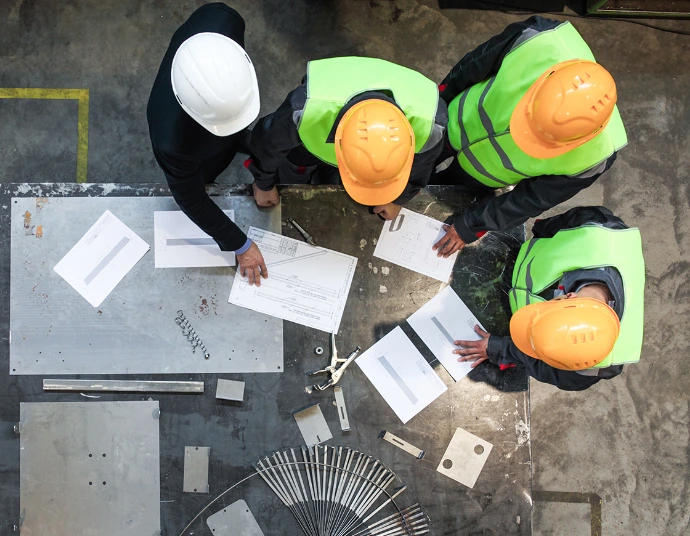
Four document families from different source authors, held together by a single glossary validated with the machine builder.
Every hazard warning was rewritten to read the way American machine safety documentation reads, then checked by a second linguist.
Deliveries were sequenced to match the installation calendar, plant by plant, instead of one large drop at the end.
A three-plant rollout that depended on paperwork
Identifying details in this case study have been changed to protect a client confidentiality agreement. The volumes, timeline, and process are representative of the actual project.
The client is a US machine tool integrator. It had signed an agreement to install and support vertical and horizontal machining centers from a Chinese builder, with the first units committed to three American factories on a staggered schedule. The machines were excellent. The documentation situation was harder: operator manuals, maintenance manuals, spare parts lists, and the HMI screens themselves existed only in Simplified Chinese.
Without English documentation, the integrator could not run operator training, could not sell service contracts, and could not hand a plant safety manager anything to file. The installation dates were contractual. Documentation had become the critical path.
The challenge: uneven source files and a fixed calendar
When our project manager analyzed the corpus, three problems stood out.
- The source was uneven. The manuals had been written by different departments over several years. Whole sections were duplicated between models with small variations, and the same component sometimes carried two or three different Chinese names depending on the chapter.
- The screenshots could not be edited. Hundreds of HMI captures were embedded as flat images. Readers of the English manual would see Chinese screens unless someone rebuilt them.
- Safety language had to be American. Warnings translated word for word from Chinese conventions do not read like US machine safety text. The integrator needed hazard messages consistent with ANSI B11 practice, because its customers' EHS teams would review them.
And there were 8 weeks to do all of it, in an order dictated by which plant received its machines first.
What we did
Wei Zhang, our senior Chinese and English technical translator with 14 years in plant engineering and electronics manufacturing documentation, led terminology for the project. Before translation started, he built a trilingual glossary with the builder's engineering team: each Simplified Chinese term, its approved English equivalent, and the short English label that would fit on the corresponding HMI screen. Where the source used two names for one part, the glossary settled on one.
The corpus itself got sorted before anyone translated a sentence. Alignment analysis showed that 12% of the content was duplicated across the manual set. We neutralized those duplicates through the translation memory, so each repeated section was translated and reviewed once, then reused identically everywhere it appeared. On 1,100 pages, that mattered for both cost and consistency.
For the screens, we ran OCR on the embedded captures, translated the extracted strings against the glossary, and retouched the images so the English manuals show English screens. Screen text was handled as strings rather than prose, with a character budget per field, which is what our HMI and software localization service is built for. A translator working on the maintenance chapters could see exactly what an operator would see on the panel.
Safety content followed a separate review loop. After translation and independent revision, every warning was checked against ANSI B11 phrasing conventions, with signal words and hazard structure adjusted to US practice rather than transliterated from the Chinese layout.
Key numbers. The figures below are what the client's project team tracked, and what kept the rollout on schedule.
| Metric | Detail |
|---|---|
| Volume | 1,100 pages: operator manuals, maintenance manuals, spare parts lists, HMI screens |
| Language pair | Simplified Chinese into US English (zh-CN > en-US) |
| Timeline | 8 weeks, staged deliveries matched to three installation dates |
| Duplicate content | 12% of the corpus neutralized through translation memory |
| Deliverables | English manual sets, parts lists, localized screen captures, trilingual glossary |
| Sites supported | 3 US plants |
The result
Each plant received its documentation package before its machines were powered up. Operator training started on time at all three sites, using English manuals whose screenshots matched the panels in front of the trainees. The client's service technicians got maintenance chapters they could actually work from, structured the way our maintenance documentation projects always are: procedures verified against the parts list, torque values and units checked in QA.
The trilingual glossary was handed over at the end of the project. It now belongs to the client, and it will make the next machine model faster and cheaper to document. That is the quiet benefit of doing terminology first on a job like this. Projects in heavy machinery translation rarely fail on grammar. They fail when the same valve has three names, and this one never did.
Why Chinese machine documentation needs this treatment
Chinese builders now export machine tools at every price point, and their engineering is often ahead of their documentation. The gap is not a translation problem alone. It is a corpus problem, a formatting problem, and a safety compliance problem at the same time. A vendor that only translates text will hand you 1,100 accurate pages that still contain Chinese screenshots and warnings no US safety officer would sign off on.
Our approach to technical translation from Simplified Chinese starts with what the end reader needs: an operator who has never seen the machine, a technician holding a parts list, an EHS manager doing a pre-startup review. If you are importing equipment and staring at a stack of Chinese PDFs, send us the files. You will get an itemized quote, including the duplicate analysis, within one business hour.
Questions about this project
Can you work from scanned or non-editable Chinese manuals?
Yes. On this project, hundreds of HMI captures were flat images inside the PDFs. We ran OCR on the Chinese text, translated the extracted strings, and retouched the images so the English manuals display English screens. The same workflow applies to scanned pages, drawings with embedded text, and legacy files with no source available.
How do you handle machine safety standards like ANSI B11?
Safety content gets its own review pass after translation and independent revision. We check hazard messages against ANSI B11 phrasing conventions, use US signal words and warning structure, and flag any source warning that seems incomplete for the client to raise with the manufacturer. We translate and adapt the language; the machine builder remains responsible for the engineering behind it.
Do you translate HMI screens along with the manuals?
We prefer to. When the interface and the manuals are translated separately, the button names stop matching and operators lose trust in the documentation. On this project one glossary controlled both, so every screen label in the manual matched the panel exactly, down to abbreviations shortened to fit the display.
Can deliveries be staged to match an installation schedule?
Yes, and for equipment rollouts we recommend it. Here, batches were sequenced so each plant had its full documentation package before its machines arrived. Staging also lets early client feedback improve later batches, since the translation memory and glossary carry every approved decision forward.