Technical Translation Agency · Seattle and the Puget Sound
Technical Translation Services for Seattle Aerospace, Maritime, and Software Companies
Seattle's technical economy runs on two manufacturing traditions that are among the largest in the United States: Boeing's commercial aircraft production at Everett and Renton, and the commercial fishing and maritime industries operating from Fishermen's Terminal. Techniwords serves Puget Sound technical teams with certified translation in Japanese, Chinese, and Korean, with an ISO 17100-compliant process refined over 15 years of aviation and maritime documentation.
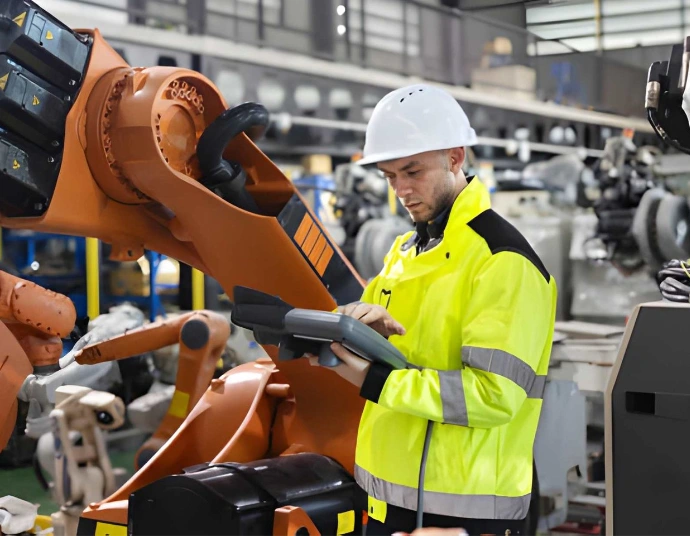
The 787 Dreamliner's Japanese composite wing structure, built by Mitsubishi and Kawasaki, creates ongoing Japanese-to-English translation demand throughout the Puget Sound supply chain. Our Japanese aerospace translators have backgrounds in aircraft structures and composite materials, and maintain program-specific terminology databases.
Fishermen's Terminal is home to the North Pacific fishing fleet, and the vessels, processing equipment, and safety systems that fleet operates generate documentation in English, Japanese, Chinese, and Korean. We translate vessel class documentation, equipment manuals, and USCG-required safety materials for the Alaska fishing industry.
Seattle's software industry, with Amazon and Microsoft as anchors, creates Chinese, Japanese, and Korean localization demand for technical content. Our software and IT translators combine linguistic accuracy with the ability to work in structured content environments, XML, DITA, and developer documentation formats.
Technical Translation Services in Seattle: The Puget Sound Industrial Base
The Seattle metropolitan area and the broader Puget Sound region support one of the most distinctive combinations of heavy manufacturing and technology industry of any US metro. Boeing's Everett facility is the largest building in the world by interior volume, housing final assembly lines for the 777, 777X, and 787 Dreamliner. Boeing's Renton plant produces the 737 MAX on one of the most closely watched production lines in commercial aviation. Together, these two facilities generate enormous documentation requirements: maintenance manuals, component specifications, airworthiness directives, supplier quality records, and training materials that flow between Boeing and its international supply chain partners, airline customers, and maintenance organizations worldwide.
The 787 Dreamliner's supply chain brings Seattle's translation requirements into particularly sharp focus. Mitsubishi Heavy Industries builds the 787's composite wing box at its Nagoya facilities; Kawasaki Heavy Industries produces fuselage sections; Fuji Heavy Industries supplies additional wing components. That structure means the technical documentation for one of Boeing's flagship programs flows continuously between English and Japanese, with every supplier quality record, engineering change notice, and inspection finding requiring accurate translation in both directions. The Puget Sound supplier ecosystem, from aerostructures manufacturers in Everett to precision machining shops throughout King and Snohomish counties, participates in that documentation flow.
Techniwords has served US aerospace, maritime, and technology companies for 15 years, as a member of the American Translators Association (ATA) and the Globalization and Localization Association (GALA). Our ISO 17100-compliant process ensures that every project includes specialized translation by a sector-matched linguist, independent revision by a second specialist, and a final quality check before delivery. For Seattle companies operating across the Boeing supply chain, the maritime industry, and the technology sector, that depth of process means your documentation standards are met consistently across every project, every language pair, and every document type.
Aerospace Translation for Boeing and the Puget Sound Supply Chain
Boeing's production documentation requirements cover multiple document types simultaneously, and the translation demands differ significantly across them. Maintenance manuals and task-based procedures follow FAA-aligned formatting conventions and often incorporate Simplified Technical English source text. Component specifications and engineering drawings carry tolerance and material property information where a single mistranslated value is a quality escape. Supplier quality records and conformance documentation must align with AS9100 traceability requirements. Training materials for international airline maintenance crews need to function in the target language at the same readability and safety level as the English originals.
For the Boeing 787 program specifically, our aerospace translation work includes Japanese-to-English translation of supplier quality documentation from Mitsubishi and Kawasaki, English-to-Japanese translation of engineering change notices and supplier requirements, and Korean-language documentation for Korean Air's maintenance operations on 787 fleet aircraft. Korean Air is one of the 787's launch customers, and its maintenance operations documentation includes translated procedures, component manuals, and training materials that connect directly to Boeing's documentation tree.
Beyond the 787 program, the Puget Sound aerospace supplier community generates translation requirements across a range of document types. Aerostructures manufacturers translate quality management system documentation for their international parent companies or certification bodies. Precision machining shops translate drawing notes and specifications when working with international OEMs. Aircraft interiors suppliers translate product documentation for airline customers in Asian markets. Maintenance and overhaul documentation for Puget Sound-based MRO operations flows in Japanese, Chinese, and Korean depending on the airline customer being served.
Technical Translator Seattle: Japanese for the 787 Supply Chain
The Japanese language runs as a continuous thread through Seattle's aerospace supply chain in ways that are not always visible from the surface. Mitsubishi Heavy Industries, Kawasaki Heavy Industries, and Fuji Heavy Industries are not incidental participants in the 787 program; they are responsible for primary structural elements of the aircraft, and the engineering documentation that flows between their Nagoya facilities and Boeing's Seattle engineering teams is substantial in volume and technically demanding in content. Every engineering change that affects a Japanese-supplied component generates documentation that must be accurately translated in both directions to maintain program configuration control.
Japanese technical language in aerospace has specific characteristics that distinguish it from other translation contexts. Japanese aerospace vocabulary draws on both Anglicized loan words (katakana terms borrowed from English or other European languages) and native Japanese technical terminology, and the appropriate choice between these in translation requires a linguist who knows which conventions apply in Boeing's supplier documentation environment versus JAL's maintenance operation versus an MHI production facility. Our Japanese technical translation team for aerospace work has backgrounds in aviation engineering or aerospace manufacturing, and maintains program-specific terminology aligned with Boeing's and the Japanese supply chain partners' own documentation standards.
Japanese is also the primary language for fishing vessel and equipment documentation in the Seattle maritime market. Japan's involvement in North Pacific commercial fishing, through Japanese-flagged vessels and through Japanese-manufactured processing and navigation equipment aboard US-flagged vessels, creates a persistent demand for Japanese translation of vessel documentation, equipment manuals, and safety systems materials. A Japanese-manufactured fish processing line or navigation system installed on a vessel out of Fishermen's Terminal will have Japanese-language documentation that its operators need in English, and Japanese-language certifications and type approvals that US marine surveyors need to evaluate.
Maritime and Shipbuilding Translation for Seattle's Marine Industry
Fishermen's Terminal in Seattle's Interbay neighborhood is home port for the majority of the North Pacific fishing fleet, one of the most productive commercial fishing operations in the world. The Alaska pollock fishery, the Pacific cod fishery, and the crab fisheries that operate from Seattle-based vessels generate a documentation ecosystem that spans vessel class documentation under the American Bureau of Shipping, USCG safety and inspection records, international fishing vessel certifications, and the technical documentation for the processing, refrigeration, and fishing equipment installed on those vessels.
The technical documentation for North Pacific fishing operations crosses language boundaries for two principal reasons. First, the equipment installed on fishing vessels often comes from Japanese, Chinese, and Korean manufacturers: navigation systems, sonar and fish-finding equipment, processing machinery, refrigeration systems, and deck equipment are supplied by Asian manufacturers whose documentation arrives in the manufacturer's language and must be translated for US crews and inspectors. Second, the fishing operations themselves intersect with international regulatory frameworks, including agreements with Japanese and Russian fisheries authorities, that require documentation in multiple languages.
Our maritime and shipbuilding translation practice covers vessel class documentation under ABS, DNV, and Lloyd's Register rules; USCG inspection and certification materials; international safety management code documentation; fishing and processing equipment manuals in Japanese, Chinese, and Korean; and the commercial documentation that accompanies international fishing agreements and quota allocations. Seattle's maritime industry is unusual in that the same project may require Japanese for fish-finding equipment documentation, Chinese for processing machinery manuals, and Korean for navigation system certifications, sometimes from the same vessel's documentation package.
Software and IT Technical Documentation for Seattle Tech Companies
Amazon and Microsoft anchor a software and technology industry in Seattle that is among the most significant in the world, and the technical documentation those companies and their local supply chain produce flows into Chinese, Japanese, and Korean markets in volumes that few other US metro areas match. Cloud platform documentation, developer guides, API references, SDK documentation, and enterprise software deployment guides all require translation that combines linguistic accuracy with the technical ability to handle code examples, command-line syntax, and platform-specific terminology without introducing errors that would prevent the documentation from functioning as a technical reference.
Software documentation translation is not primarily a vocabulary problem; it is a structural problem. A translator working on a developer API guide must understand which parts of the text are translatable, which must be left in English (function names, parameters, syntax elements), and which must be adapted for the conventions of the target language's developer community. Japanese and Chinese developer documentation follows formatting conventions for code comments and inline examples that differ from US practice. Korean technical documentation for enterprise software has its own conventions for UI element naming and workflow description. Our software and IT translation team includes translators with software development backgrounds who understand these structural requirements.
Beyond the cloud and enterprise software companies, Seattle's technology sector includes hardware companies, IoT device manufacturers, and specialized software vendors whose documentation ranges from embedded system firmware descriptions to enterprise integration guides. User and operator manuals for technology products sold in Japanese, Chinese, and Korean markets need to be translated with the same attention to accuracy as any industrial documentation: a wrong configuration instruction or a misrendered safety warning in a user manual carries liability implications identical to a mistranslated maintenance procedure in a manufacturing setting.
Common Documents We Translate for Seattle Technical Companies
The table below covers document types that appear most frequently for Seattle-area companies in aerospace, maritime, and software, with the language pairs each sector typically requires.
| Industry | Common Documents | Primary Language Pairs |
|---|---|---|
| Aerospace and aviation | Maintenance manuals, supplier quality records, engineering change notices, training materials | EN-JA (787 supply chain), EN-KO (Korean airline customers), EN-ZH (Chinese carriers) |
| Maritime and fishing | Vessel class documents, equipment manuals, safety management documentation, inspection records | EN-JA (Japanese equipment), EN-ZH (Chinese machinery), EN-KO (Korean navigation systems) |
| Software and IT | Developer documentation, API guides, user manuals, enterprise deployment guides, UI strings | EN-ZH (largest Asian market), EN-JA, EN-KO |
Japanese, Chinese, and Korean Technical Translation in Seattle
Japanese technical translation is the highest-volume non-English language in Seattle's aerospace and maritime sectors, driven by the depth of Japanese participation in Boeing's 787 supply chain and by the Japanese-manufactured equipment on North Pacific fishing vessels. Japanese aerospace vocabulary in the Boeing supply chain context has been shaped over decades of program documentation exchange between Boeing engineering and Japanese manufacturer engineering teams, and translators who have not worked in that specific context may apply general aerospace vocabulary that does not match the program conventions. Our Japanese translators for Seattle aerospace work maintain terminology databases aligned with the Boeing-MHI-Kawasaki program documentation environment.
Chinese-language documentation is the highest-volume language in Seattle's software and technology sector, reflecting the size of the Chinese developer and enterprise software market and the importance of Chinese airline customers to Boeing's commercial aircraft business. Chinese Simplified is standard for Mainland China markets; Chinese Traditional covers Taiwan and Hong Kong. For Boeing program documentation that flows to Chinese carriers and maintenance organizations, the distinction between Simplified and Traditional Chinese is an airline-by-airline decision that our project management confirms at the start of each project. For technology companies, Chinese Simplified is the standard for developer documentation targeting the largest accessible market.
Korean-language translation in Seattle connects primarily to Korean airline customers for Boeing aircraft and to Korean-manufactured equipment in the maritime sector. Korean Air and Asiana Airlines are significant Boeing customers with substantial 777 and 787 fleets, and their maintenance operations documentation requires Korean translation of Boeing service documents, airworthiness directives, and maintenance procedure updates. In the maritime sector, Korean navigation system and electronics manufacturers have substantial market share on North Pacific fishing vessels, and the technical documentation for those systems reaches Seattle marine operators in Korean. Our Korean technical documentation team covers both aviation and maritime work with sector-matched translators.
Why Seattle Companies Choose Techniwords as Their Technical Translation Agency
Techniwords does not maintain a Seattle office, and the companies we serve in the Puget Sound region tell us consistently that the remote model works well for their documentation workflows. Files move through encrypted channels, project managers are reachable during Pacific Time business hours, and the ISO 17100 workflow we apply means that your project includes independent revision by a second specialist on every deliverable, whether it is a 10-page supplier quality report or a 400-page maintenance manual revision.
As a technical translation company with 15 years of US industrial experience and membership in ATA and GALA, Techniwords brings the depth that Seattle's cross-sector translation requirements demand. The same project management infrastructure serves a Boeing supplier's Japanese engineering change translation and a Fishermen's Terminal maritime company's Chinese equipment manual translation: one project manager, one terminology database per client, and one quality process that applies consistently regardless of the document type. The certified specialists assigned to your projects have verifiable technical backgrounds, and you can request their profiles before any project begins.
On Boeing 787 supply chain documentation: Engineering change notices and supplier requirements for MHI and Kawasaki-supplied structures must maintain configuration control across the program. We build and maintain dedicated termbases for each Boeing program we support, so that system names, part designations, and tolerance specifications translate consistently from the first document to the revision that arrives three years later.
Technical Translation FAQ for Seattle and the Puget Sound
What technical translation services do you provide in Seattle?
Techniwords handles aerospace documentation for Boeing suppliers and the Puget Sound aerospace supply chain, maritime and fishing industry documentation for Fishermen's Terminal and North Pacific fleet operators, and software and IT documentation for Seattle technology companies. Primary languages are Japanese for the Boeing 787 supply chain and maritime equipment, Chinese Simplified for software and technology markets and Chinese airline customers, and Korean for Korean airline maintenance documentation and marine electronics. Free itemized quotes within one business hour.
Do you handle Boeing aerospace supplier documentation and Japanese supply chain materials?
Yes, and this is one of our core practice areas for Seattle. We translate Japanese-to-English supplier quality documentation from Mitsubishi and Kawasaki program facilities, English-to-Japanese engineering change notices and supplier requirements, and Korean-language documents for Korean airline customers' maintenance operations. Our Japanese aerospace translators maintain Boeing program-specific terminology databases aligned with the documentation conventions established over decades of Boeing-MHI engineering exchange. Terminology consistency across an engineering change program is something we document for program traceability.
Can you translate maritime documents for Seattle's fishing and shipping industries?
Yes. We translate vessel class documentation under ABS, DNV, and Lloyd's Register rules; USCG safety and inspection materials; international safety management code documents; and the manuals for Japanese, Chinese, and Korean-manufactured equipment installed on North Pacific fishing vessels. For fishing vessels operating out of Fishermen's Terminal with Japanese sonar systems, Chinese processing equipment, or Korean navigation electronics, we handle the full documentation package in a single project with one project manager coordinating across all three language pairs.
Do you work with Japanese aerospace suppliers for Boeing 787 program documentation?
Yes. The 787's Japanese supply chain at MHI, Kawasaki, and Fuji generates continuous translation requirements in both directions across the program lifecycle. We handle engineering change documentation flowing from Boeing engineering to Japanese supplier teams, supplier quality records and conformance documentation flowing from Japanese facilities to Boeing's Everett and Renton programs, and configuration control documentation that must remain consistent between the Japanese source records and the English program documentation. Program-specific terminology databases are maintained per supplier and updated with each engineering change cycle.
Does Techniwords have an office in Seattle?
No. Techniwords is a US-based technical translation agency without a Seattle office. We serve Puget Sound clients through a fully remote model, with project management reachable during Pacific Time business hours. Files move through encrypted transfer systems, and the delivery quality is the same whether you are in Everett, Renton, Fishermen's Terminal, or downtown Seattle. Our ISO 17100-compliant workflow applies to every project regardless of client location.
What software and IT documentation do you translate for Seattle technology companies?
We translate developer documentation, API reference guides, SDK documentation, enterprise software deployment guides, user manuals, and UI strings for software products sold in Japanese, Chinese, and Korean markets. Our software translators work in structured content formats including XML, DITA, and Markdown, and understand which text elements in developer documentation must remain in English versus which must be translated for the target language's developer community. We handle both the translation and the file engineering to deliver content in the same format as the source, ready for publication.
Get a Free Quote for Your Seattle Technical Translation Project
Quotes for Seattle projects come back itemized within one business hour: price, delivery date, and the assigned translator's profile. No commitment, and full confidentiality applies from the first message.
Get a Free Quote