Bay Area
Technical Translation Services in San Jose, CA
Techniwords translates the documentation that keeps Silicon Valley hardware moving: wafer fab equipment manuals, cleanroom SOPs, chip datasheets, and the software that ships with all of it. Our certified technical translators work every day between English and the languages of the semiconductor supply chain, from Japanese and Korean to Simplified Chinese and Vietnamese.
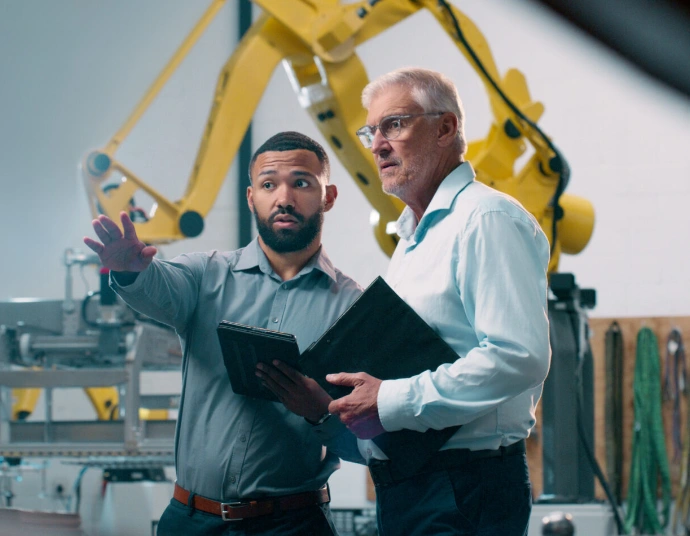
Our linguists know the difference between etch and ash, stepper and scanner, CVD and CMP. Tool manuals read like they were written by a process engineer.
Japanese for equipment partners, Korean for memory customers, Simplified Chinese for assembly and test, Vietnamese for the South Bay production floor.
EAR-sensitive files are handled under NDA, on encrypted infrastructure, by vetted translators. Nothing is ever pasted into a public machine translation engine.
The Equipment Side of Silicon Valley Runs on Translated Manuals
Ask anyone outside the industry what San Jose makes and they will say software. Ask a purchasing manager at a fab in Hsinchu, Pyeongtaek, or Kumamoto and they will name the machines: deposition and etch systems from Applied Materials in Santa Clara, plasma and clean tools from Lam Research across the bay in Fremont, wafer inspection and metrology platforms from KLA in Milpitas. The companies headquartered within a twenty-minute drive of downtown San Jose build the equipment that nearly every advanced chip on earth passes through.
Almost none of those machines stay in California. They ship to Taiwan, South Korea, Japan, Singapore, Germany, and Arizona, and each one crosses the loading dock with a documentation set that can run past a thousand pages: installation qualification procedures, operation manuals, preventive maintenance schedules, field service bulletins, spare parts catalogs, and interlock descriptions. When a night-shift equipment engineer in Pyeongtaek has to work through an English-only troubleshooting tree, mean time to repair grows and support tickets pile up in San Jose. That is the problem our electronics and semiconductor translation team exists to remove.
Techniwords has spent 15 years as a technical translation company serving equipment makers and their suppliers. We hold the terminology line across a full documentation set, so the phrase chosen for a load lock or an end effector in chapter one is still the same phrase in the chapter 14 wiring diagrams and in next year's service bulletin.
Documentation for Fabs, Cleanrooms, and Field Service
Semiconductor equipment documentation lives under standards that most translation vendors have never opened. SEMI S2, the environmental, health, and safety guideline for semiconductor manufacturing equipment, shapes how hazard warnings, interlock descriptions, and energy isolation procedures must be written. SEMI S8 adds ergonomics criteria. Chemical hazard communication follows OSHA 29 CFR 1910.1200, aligned with GHS. A translator who does not know these frameworks will flatten carefully calibrated warnings into vague prose, and a safety reviewer at the receiving fab will bounce the whole package back.
Here is what San Jose and Santa Clara County teams most often send us:
| Document type | Typical source | Most requested languages |
|---|---|---|
| Tool installation and facilities manuals | Equipment OEMs | Korean, Japanese, Simplified Chinese, German |
| Cleanroom SOPs and gowning procedures | Fabs, foundry customers | Vietnamese, Spanish, Korean |
| Field service bulletins and retrofit notices | OEM service organizations | Japanese, Korean, Simplified Chinese |
| Component datasheets and errata | Fabless design houses | Simplified Chinese, Japanese, Korean |
| Supplier quality and audit documentation | Tier 1 and Tier 2 suppliers | Simplified Chinese, Japanese, Vietnamese |
Procedures are a specialty of their own. Our team translates cleanroom SOPs and work instructions with the step-verify-record structure intact, because a procedure that drifts in translation is a procedure operators will improvise around.
Software, Networking, and the Fabless Side of the Valley
San Jose is also home to Nvidia and Cisco, and to dozens of fabless design companies whose product is a GDSII file and a mountain of documentation. Their translation needs look different from the equipment makers': developer guides, SDK references, release notes, UI strings, CLI documentation, and training curricula for engineers in Taipei, Tokyo, Seoul, and Bangalore. String length limits, placeholder variables, and version churn make this closer to localization engineering than to classic document work, which is why we run it through our software and IT translation practice rather than a generic workflow.
Developer-facing content deserves particular care. A mistranslated parameter description costs support hours; a mistranslated code comment gets copied into production. When clients ask us about translating API documentation, our answer is always the same: the code samples stay untouched, the prose around them gets translated by someone who can actually read the code samples.
Japanese and Korean: The Equipment and Memory Axis
The semiconductor equipment world is effectively a three-way conversation among the United States, Japan, and South Korea. Japanese firms such as Tokyo Electron supply and compete with San Jose-area OEMs, and Japanese component makers dominate photoresists, silicon wafers, and specialty gases. Contracts, joint development agreements, tool specifications, and quality claims flow in both directions. Our Japanese technical translation pairs are staffed by translators who have spent years inside this exact vocabulary, including the JIS standards Japanese suppliers cite by reflex.
On the customer side sit the Korean memory giants. Samsung runs its US semiconductor headquarters in north San Jose, and SK Hynix maintains a major Bay Area presence, which means tool acceptance documents, process qualification reports, and audit findings routinely need to move between English and Korean in days, not weeks. For that work we assign Korean translators who know fab vocabulary in both alphabets, so a hardware engineer in Icheon and a field service manager in Milpitas are reading the same machine.
Simplified Chinese for a Distributed Supply Chain
Assembly, test, and packaging still concentrate heavily in mainland China, and many San Jose companies buy components, subassemblies, or OSAT services there. The documentation flow runs both ways: English specifications and quality requirements travel east, while Chinese test reports, certificates of analysis, and corrective action responses travel west and must be readable by engineers in California. We translate both directions through our Simplified Chinese technical translation team, with a reviewer independent of the original translator on every job, following ISO 17100.
This is also where export control discipline matters most. Some equipment documentation falls under the Export Administration Regulations, 15 CFR Parts 730 to 774, and recent rules have put semiconductor technology squarely in scope. We work under NDA, restrict files to named project staff, and keep everything off public machine translation engines. If your compliance team needs a specific handling protocol, we follow it and document that we did.
Vietnamese: San Jose's Homegrown Language Advantage
San Jose is home to the largest Vietnamese community of any city outside Vietnam, centered on Little Saigon along Story Road. That community staffs a meaningful share of the South Bay's electronics manufacturing floor: contract manufacturers, cable and harness shops, precision machining suppliers, and the back-end operations of larger OEMs.
More Vietnamese speakers than any city outside Vietnam. San Jose's Vietnamese American community numbers over 100,000 residents, and Vietnamese is one of the most requested languages for production floor documentation anywhere in Santa Clara County. OSHA expects safety training to be delivered in a language employees actually understand, which makes this a compliance question, not a courtesy.
Manufacturers ask us for Vietnamese work instructions, lockout tagout procedures, hazard communication training, ESD handling guides, and employee handbooks. Machine-translated Vietnamese is notoriously unreliable for procedural text; ours is written and revised by native-speaking technical translators. You can see how we handle the pair on our Vietnamese technical translation page.
File Formats, Terminology, and the Infrastructure Behind Consistent Translation
San Jose equipment companies typically produce documentation in structured authoring environments: FrameMaker for long manuals, DITA XML for modular content architectures, and InDesign for product datasheets and collateral. Fabless design companies produce content in everything from Word to custom documentation systems, and their developer documentation often lives in Markdown or reStructuredText. Our workflow accepts all of these formats, translates in place, and returns the file with formatting, cross-references, and table of contents entries intact. For DITA content specifically, we translate at the topic level so that reused topics stay synchronized across all manuals that include them, rather than requiring a separate translation for every instance.
Terminology management is where multi-year client relationships pay off. A semiconductor equipment company that works with us across multiple product generations builds a translation memory and glossary that accumulates every approved term decision: the Korean rendering of a specific proprietary valve design, the Japanese phrase a process engineer at a customer fab has confirmed is the correct rendering of a specific interlock condition, the Simplified Chinese name for a spare part number that appears in 40 different service bulletins. Those decisions are assets. They reduce review time, reduce the chance of a field engineer reading an unfamiliar term on a night shift, and reduce per-word translation cost because previously translated segments are reused rather than retranslated. The companies that invest in terminology management once get that return on every document they produce afterward.
For clients sending materials in PDF only, we work with the source layout where possible or rebuild it in a clean format before translation, so the translated document is readable without the contortions that direct-from-PDF processing produces. We are explicit about this in the quote: if your source is a scanned PDF of a Japanese manual, we will tell you exactly what the preparation step costs and what the output will look like, before you commit to the project.
Need a Technical Translator in San Jose?
When a San Jose engineering team goes looking for a technical translator, the real question is whether the person on the other end can read the document the way its author meant it. Our translators are selected for exactly that: degrees or working experience in electrical engineering, materials science, or software, layered on top of professional translation credentials, with ATA certification where the language pair offers it.
Every project gets a terminology pass before translation starts. We build or extend a client glossary, get it approved by your engineers, and lock it into the translation memory so revision B of a manual reuses the vetted language of revision A. Last year, that discipline let us deliver a 240-page plasma etch tool maintenance manual into Korean in eleven business days, including an 800-term glossary the client's Korean field office signed off on before full translation began. The second linguist who revised that manual had never seen the first draft, which is precisely the point of independent revision.
A Technical Translation Agency on Silicon Valley Time
Techniwords is a technical translation agency built for engineering deadlines, working with member obligations to both the American Translators Association and GALA, and running an ISO 17100-compliant process on every deliverable. We are based in Texas and serve San Jose entirely remotely, which in practice means your files move over an encrypted portal, your questions get answered during Pacific business hours, and your quote arrives within one business hour of upload, itemized by document and language.
Typical turnaround for a 5,000-word service bulletin into one language runs 2–3 business days. Multi-language releases run in parallel rather than in sequence, so a four-language drop lands roughly together. For tool shipment deadlines we offer expedited scheduling with the same two-linguist workflow, never a single rushed translator working alone. San Jose is one of dozens of markets we cover this way; the full list is on our locations page.
San Jose Technical Translation: Questions We Hear
How fast can you translate a semiconductor tool manual?
A typical tool manual chapter of 5,000 to 8,000 words takes 2–4 business days per language, including independent revision. Full manuals of 100,000 words and up are planned as phased deliveries aligned with your shipment schedule, usually 3–6 weeks with a team working from a shared translation memory. If a tool ships from Santa Clara or Fremont on a fixed date, tell us the date and we will build the schedule backward from it. Every quote we issue includes a committed delivery calendar, not an estimate.
Can you handle Japanese equipment documentation from our suppliers?
Yes, Japanese to English is one of our busiest pairs for San Jose clients. We translate supplier specifications, JIS-referenced test reports, joint development agreements, and maintenance documentation from Japanese partners and competitors alike. Our Japanese linguists work in semiconductor and precision equipment vocabulary daily, so terms arrive in the form your process engineers expect rather than dictionary approximations. We can also translate your responses back into Japanese for the supplier's engineering team.
Do you translate safety and production documents into Vietnamese?
Yes, and demand from Santa Clara County manufacturers keeps growing. We translate work instructions, lockout tagout procedures, hazard communication materials under OSHA 29 CFR 1910.1200, ESD handling guides, and training decks into Vietnamese written by native-speaking technical translators. Because San Jose hosts the largest Vietnamese community outside Vietnam, well-translated production documents directly improve training outcomes and audit results on local floors.
How do you handle export-controlled or EAR-sensitive files?
We restrict access to named, vetted project staff under NDA, transfer files only through encrypted channels, and never process controlled content through public machine translation engines. If your compliance program requires US-person-only handling, specific storage locations, or certificate of destruction after delivery, we implement your protocol and confirm it in writing. Export classification itself stays with your trade compliance team; our job is to make sure translation never becomes the weak link in it.
Which file formats can you work with?
Structured FrameMaker and DITA XML for equipment manuals, InDesign for datasheets and marketing collateral, Word and Excel for procedures and parts lists, PDF when nothing else survives, plus software formats such as XLIFF, PO, RESX, and JSON for UI and developer content. We return files in the original format with layout intact, including regenerated tables of contents and cross-references for long manuals.
Do you have an office in San Jose?
No. Techniwords is based in Texas and serves San Jose remotely, as we do clients across the country. In practice that changes nothing: file exchange is electronic and encrypted, project managers are available through Pacific business hours, and quotes arrive within one business hour. For on-site needs such as interpreting during an equipment install or a supplier audit, we arrange qualified technical interpreters to travel to your Bay Area site.
Ship the Tool. We Will Handle the Manual.
Send us a chapter, a full documentation set, or a folder of field service bulletins. You will get an itemized quote within one business hour, a committed delivery calendar, and translations your overseas fab customers can work from at 3 a.m.
Get a Free Quote