Southern California
Technical Translation Services in San Diego, CA
Techniwords translates documentation for the three industries that define San Diego's technical economy: naval shipbuilding at NASSCO, cross-border medical device manufacturing in the CaliBaja corridor, and genomic instruments from Illumina and the biotech cluster that grew around it. Our certified technical translators work in Spanish, Japanese, and the regulatory languages that maritime and medical certification demand.
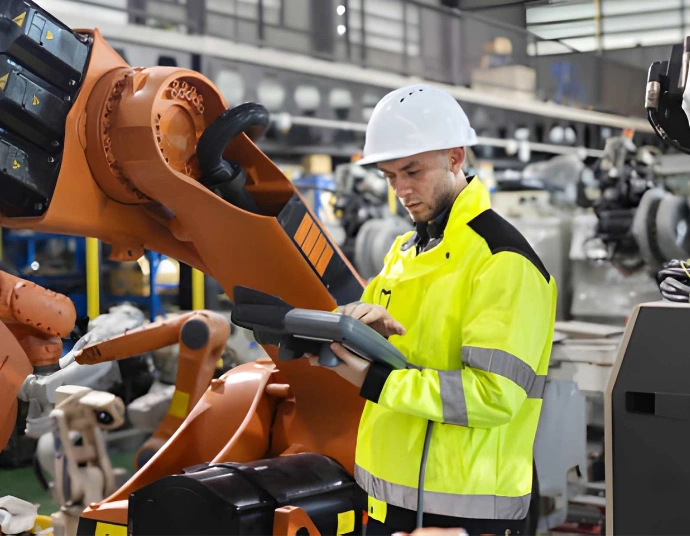
Ship design specifications, ABS and DNV classification submissions, Navy technical manuals, and MRO procedures for repair yards along National City's waterfront. We know the standards that govern every page.
San Diego designs, Tijuana manufactures. We translate FDA 510(k) submissions, instructions for use, and quality system documentation in both directions across the border, in compliance with 21 CFR Part 820.
Illumina's sequencers, reagent kits, and software documentation reach labs worldwide. We translate instrument manuals, SDS sheets, and SOPs for the full San Diego biotech cluster.
NASSCO and the West Coast's Only Major Commercial Shipyard
General Dynamics NASSCO, operating on a 90-acre waterfront site in National City at the southern edge of the San Diego metropolitan area, is the only major shipyard on the US West Coast capable of building large commercial vessels and performing complex naval repair. The yard currently constructs T-AO fleet oilers for the US Navy, does depot-level maintenance on surface combatants, amphibious ships, and auxiliaries, and builds commercial product tankers for coastwise operators. Each of those programs runs on documentation that has to move between English and multiple other languages.
Equipment installed aboard a Navy vessel comes from suppliers in Germany, Japan, South Korea, Italy, and France. When NASSCO engineers integrate that equipment, they need accurate English translations of manufacturer installation manuals, commissioning test procedures, and wiring diagrams before the hull goes to sea. When the ship is assigned to an allied navy operator, the same manuals need to travel into Spanish or Portuguese. Our maritime and shipbuilding translation team handles that workflow, with translators who have worked inside this vocabulary for years and understand the governing standards that shape how warnings, hold points, and safety interlocks must be expressed.
The reverse flow is equally active. Structural design packages, weld procedure specifications, nondestructive testing protocols, and acceptance test procedures produced at NASSCO routinely go out to subcontractors and overseas partners. Translators who do not understand classification society rules and MIL-STD documentation conventions tend to soften the specific tolerances and mandatory hold points those documents contain, which creates inspection failures downstream. Precision is the only thing that matters in shipbuilding documentation, and precision requires translators who read the source document the way its author intended it.
Ship Documentation Types We Translate in San Diego
The documentation profile of an active shipyard spans many disciplines and document categories. The table below covers what we most commonly receive from San Diego-area maritime clients and the languages those documents travel in:
| Document type | Typical source | Languages most requested |
|---|---|---|
| Shipbuilding specifications and general arrangements | Naval architects and design teams | German, Japanese, Korean |
| Classification society submissions (ABS, DNV, Lloyd's) | NASSCO and its subcontractors | Norwegian, German (source); English (target) |
| Equipment installation and operating manuals | European and Asian OEMs | German, Japanese, Italian, French |
| MIL-SPEC maintenance manuals and MRC cards | Defense programs | Spanish (for allied navy customers) |
| Weld procedures, NDE protocols, and inspection records | Production and QA teams | Spanish (bilingual workforce) |
| Stability calculations and inclining experiment reports | Naval architects at delivery | Varies by customer flag state |
Requests for technical specification translation from San Diego shipbuilding clients often carry an urgency that most translation projects do not: delivery dates are tied to drydock windows and Navy acceptance milestones, and slipping either costs far more than the translation would have.
CaliBaja: Medical Devices Designed in San Diego, Built in Tijuana
The CaliBaja megaregion, spanning San Diego County and Baja California Norte, hosts the largest concentration of medical device manufacturers on the US-Mexico border. The operating model is well established: San Diego-based companies hold FDA registrations, design history records, and 510(k) or PMA clearances; the actual production happens twenty minutes south in Tijuana's maquiladora industrial parks, where Medtronic, Welch Allyn, Integer Holdings, and dozens of smaller device makers operate factories under US quality system oversight. That arrangement creates a specific and ongoing translation need that neither side can outsource to a general-purpose vendor.
The design and quality documentation lives in English at San Diego headquarters. The production floor in Tijuana operates in Spanish. Every device history record update, every change order, every corrective action procedure, and every manufacturing work instruction that production depends on needs to be clearly understood by operators who read Spanish. At the same time, the US headquarters needs to review and approve documents that production management writes in Spanish. Neither set of documents is peripheral: they are the quality system records that FDA would examine in a warning letter investigation or a consent decree proceeding.
Our medical device translation team handles both directions of this workflow. We translate English design documentation, SOPs, and quality system records going south for Tijuana production floors, and Spanish corrective action reports, batch records, and deviation notices coming north for review by US quality engineers. We understand 21 CFR Part 820 vocabulary and the Quality Management System Regulation that updated it in 2024, so quality system documents translate as quality system documents rather than as general descriptions of quality documents.
The CaliBaja concentration is the largest medtech border cluster in the Western Hemisphere. San Diego and Tijuana together account for more medical device manufacturing jobs than any other US-Mexico border crossing. Companies on the US side hold the regulatory clearances; companies on the Mexico side provide manufacturing capacity at scale. Translation is the connective tissue that holds this operating model together legally and operationally.
Spanish: The Working Language of the CaliBaja Corridor
For San Diego-area medical device and manufacturing companies, Spanish translation is a compliance obligation as much as it is an operational convenience. OSHA requires employers to provide safety information in a form employees can understand, and FDA quality system requirements assume that every person performing a quality-critical manufacturing step has read and understood the governing procedure. A work instruction that exists only in English on a floor where most operators primarily read Spanish is a gap that shows up in every serious inspection, and FDA has made clear in multiple warning letters that language barriers in quality documentation are not a mitigating factor.
Our Spanish technical translation team distinguishes between standard Latin American Spanish and the northern Mexican Spanish spoken in Tijuana, and we know when that distinction matters for production documentation. Medical Spanish has its own vocabulary, particularly for FDA-regulated device categories and for the quality management concepts that come directly from US regulations. A translator who handles pharmaceutical or medical texts daily writes cleaner, more consistent Spanish for a device DHR than one whose background is in general technical content.
Beyond CaliBaja, San Diego's general industrial and construction sectors also generate demand for Spanish safety documentation: lockout tagout procedures, confined space entry permits, fall protection training materials, and OSHA-mandated hazard communication training. These tend to be shorter documents produced at higher volume, and they need to be correct in the way that a posted safety sign in a shipyard needs to be correct, because the consequences of ambiguity are immediate and physical.
Illumina and the San Diego Genomics Cluster
Illumina, headquartered in University City in north San Diego, builds the DNA sequencing platforms that most of the world's genomics research runs on. Its HiSeq, NovaSeq, and iSeq instruments ship to research hospitals, national laboratories, public health agencies, and clinical diagnostics operations in more than 140 countries. Each instrument arrives with a documentation set that typically includes a setup guide, a software reference manual, library preparation protocols for each application, a reagent safety data sheet package, and compliance documentation addressing CE marking, FDA classification, and local regulatory authority requirements in each target market.
When that documentation ships to Germany, Japan, South Korea, France, or China, the instrument manual and regulatory content must be available in the local language. In some markets local-language instructions are a regulatory requirement. In others they are a practical necessity: laboratory technicians in a hospital in Tokyo or a research center in Berlin work more accurately from documentation in their own language than from English. Our biotechnology and laboratory equipment translation practice handles this kind of multi-language rollout, with each language pair assigned a dedicated translator and an independent reviewer, so no target language gets less attention than the others.
The San Diego biotech cluster extends well beyond Illumina. Thermo Fisher Scientific has major operations in the area. BD Biosciences, Hologic, and Ligand Pharmaceuticals are headquartered nearby. Biotech companies at various development stages populate the Torrey Pines and Sorrento Valley research parks. All of them generate English documentation that eventually needs to travel in other languages: patent filings, clinical study reports, investigational device exemption applications, and the manufacturing documentation that supports ISO 13485 certification for devices entering European markets.
Japanese Technical Documentation in San Diego
San Diego's Japanese business presence is more significant than is commonly recognized. Kyocera, the Japanese ceramics and electronics manufacturer, has its US headquarters in Kearny Mesa and operates manufacturing facilities there. TOYO Tire runs a US administrative center in the area. Japanese defense and aerospace suppliers maintain engineering teams in San Diego to support programs at Naval Air Systems Command and Space and Naval Warfare Systems Center Pacific. Japanese pharmaceutical companies including Takeda have clinical and regulatory operations in the area that generate steady translation demand.
Our Japanese technical translation team handles the documentation that flows through these relationships in both directions. When a Japanese electronics manufacturer needs its equipment manual translated into English for installation at a San Diego facility, we translate it with the accuracy the installation team needs. When a San Diego device company needs to translate its regulatory submission into Japanese for Pharmaceuticals and Medical Devices Agency review, we translate it with the terminology PMDA reviewers expect. Japanese is a precise language for engineering and regulatory content, and precision in translation is the only standard we accept.
Need a Technical Translator in San Diego?
When a San Diego engineering or quality team goes looking for a technical translator, the requirements tend to be specific: the translator has to understand the industry vocabulary, has to produce a document that will survive regulatory review, and has to deliver on a schedule aligned with product release or inspection timelines. General translation vendors who do not specialize in technical content will often accept the work and produce something that looks like a translation but does not hold up under engineering or regulatory scrutiny.
Techniwords has been a technical translation company for 15 years, with membership in the American Translators Association and GALA, and an ISO 17100-compliant two-linguist process on every deliverable. Every translator assigned to a San Diego project has domain credentials: a background in engineering, life sciences, naval architecture, or a closely related field, layered onto professional translation qualifications. We build and maintain client glossaries so the terminology your quality engineers approved in one document appears in exactly the same form in the next revision and the revision after that. Consistency across a documentation set is not automatic in translation; it requires deliberate management, and that management is part of every project we run.
A Technical Translation Agency for Three Regulated Industries
Most US cities have one industry that drives their technical translation demand. San Diego has three, and they happen to be among the most demanding from a regulatory and documentation standpoint. Naval shipbuilding operates under defense acquisition regulations, MIL-SPECs, and classification society rules. Medical devices operate under FDA quality system requirements and, for products sold abroad, under EU MDR and the national regulations of each target market. Genomics and biotech operate under laboratory standards, IVD regulations in Europe and other markets, and eventually FDA oversight if an assay moves from research use toward clinical use.
Being a technical translation agency that serves all three means having translators with the right domain backgrounds for each, terminology infrastructure that tracks vocabulary across regulatory frameworks, and a project workflow that can handle the urgency of a device inspection, the scope of a multi-language instrument rollout, and the precision of a ship specification, sometimes in the same week. We serve San Diego clients entirely from our Texas base, using encrypted file transfer and project managers who work Pacific hours. Quotes arrive within one business hour of upload. Our other US locations are listed on our locations page.
San Diego Technical Translation: Questions We Hear
How do you handle ITAR-controlled documents for shipbuilding programs?
We restrict ITAR and other export-controlled content to named, vetted project staff under signed NDA. Files are transferred only through encrypted channels, never processed on public machine translation engines, and access is logged at every step. If your ITAR compliance program specifies US-person-only handling or particular document storage and destruction requirements, we implement your protocol and provide written confirmation that we followed it. Export classification decisions remain with your trade compliance team; our job is to make sure translation procedures never create a breach in the controls your legal team has established.
Can you translate Spanish documents for CaliBaja medical device manufacturers?
Yes, and this is one of the most active areas of our San Diego work. We translate in both directions: English design documentation, change orders, SOPs, and quality system records going from San Diego headquarters into Spanish for Tijuana production floors, and Spanish corrective action reports, production records, and deviation notices coming north for review by US quality teams. Our translators understand 21 CFR Part 820 vocabulary and how FDA inspection teams read quality system documents, so translated records match the structure and precision that regulatory reviewers expect.
What biotech and genomic laboratory documents can you translate?
We translate instrument manuals, library preparation protocol guides, reagent safety data sheets, laboratory SOPs, ISO 13485 quality management documentation, IVD regulatory submissions for CE marking and other markets, clinical study reports, and technical white papers. For companies like Illumina running multi-language documentation rollouts, we manage simultaneous release across six or eight languages, with a dedicated translator-reviewer pair for each language so turnaround and quality are consistent across all targets.
Do you translate FDA regulatory submissions including 510(k) and IFU documents?
Yes. We translate 510(k) premarket notification submissions, PMA applications, instructions for use, device labeling, and risk management documentation. Our medical device translators understand the structure FDA examiners look for and the terminology that appears in guidance documents, so translated submissions read consistently with how device documentation is understood at the agency. For IFU translation specifically, we apply the formatting conventions and reading-level expectations of the target market, which differ country by country and sometimes by device classification.
How quickly can you turn around urgent maritime specifications?
For a technical specification of 5,000 to 10,000 words, standard turnaround is 2 to 3 business days per language including independent revision. For drydock or delivery-schedule-critical documents, we offer expedited scheduling that adds translator capacity rather than removing the review step. When you submit a quote request, include your delivery milestone date and we will build the schedule backward from it. We issue a committed calendar with every quote, not a range of estimates.
Do you have an office in San Diego?
No. Techniwords is based in Texas and serves San Diego clients remotely, as we do clients throughout the country. File transfer is encrypted and portal-based, project managers are reachable through Pacific business hours, and quotes arrive within one business hour of upload. For on-site interpreting needs at a supplier audit, vessel acceptance, or device inspection at a San Diego facility, we arrange qualified technical interpreters to travel to your site.
Three Industries. One Translation Partner.
Whether you are moving ship specifications across the Pacific, quality documents across the CaliBaja border, or genomic instrument manuals to labs in a dozen countries, Techniwords delivers translations that hold up under engineering and regulatory review. Send your files and get an itemized quote within one business hour.
Get a Free Quote